
The weather is starting to warm up, and you already know what that means: it’s time for spring cleaning.
It’s not exactly the most enjoyable task—especially in New York apartments. Closets are small, shelving is limited, seasonal items take up space for 10 months of the year, and dust seems to settle everywhere.
To help you stay organized, we’ve prepared a printable spring cleaning checklist you can download and check off as you go. It helps you track real progress.
Don’t be overwhelmed by the volume. These are the essential steps to follow for spring cleaning, and they can be adapted whether you’re tackling a full house spring cleaning or a small apartment:
- Start with decluttering in every room
- Follow a structured deep-cleaning checklist
- Clean from top to bottom
- Prioritize areas that impact visual order and health
- Move seasonal or rarely used items into a self storage unit
- Use a printable spring cleaning checklist to track progress efficiently
If you follow these steps, you can adapt the method whether you live in a full house or a studio apartment.
And in NYC, using a self storage unit can reduce in-home volume by up to 40–50%, making the spring cleaning and decluttering process significantly faster than you might expect.
What Is Spring Cleaning?
Many people wonder what spring cleaning actually is—and why it’s done in the spring… 🙂
Spring cleaning is a full reset of your home after the cold season. Spring brings stronger natural light, open windows, and a noticeable shift in the air. In New York, when you transition from winter to warmer months, your apartment can suddenly feel smaller. Dust becomes visible. Heavy clothing takes up unnecessary space. Items accumulated over the winter stand out.
Spring cleaning works because it aligns your living space with the change of seasons.
The psychological component few people talk about
When you enter the warmer season with a clean, decluttered space:
- You move more easily through your home
- You find things faster
- You experience less visual pressure
- You spend less time cleaning later
The effect builds over time. Spring cleaning is the moment you clear out what has accumulated without purpose and step into the warmer months with a home that feels refreshed for the months ahead.

Materials You Need for a Deep Cleaning
For an effective deep cleaning session, you need the right tools. Even if you feel tempted to buy ten different products, that won’t necessarily improve the outcome—and you may end up spending unnecessarily.
Here’s a practical list of essentials:
- Vacuum cleaner with attachments for corners and upholstery
- Microfiber cloths
- Multi-surface cleaning solution
- Bathroom-specific cleaner
- Mop and bucket
- Bags for donations or disposal
- Boxes for temporary organization
What You Shouldn’t Miss When Cleaning Each Room
There are elements people often overlook during cleaning. Most focus on visible surfaces and move on. However, these details make the difference between a superficial tidy-up and a proper deep clean.
Whether you’re cleaning a house or an apartment in NYC, these are the areas you shouldn’t skip:
Upper corners and high areas
Dust collects on light fixtures, the tops of cabinets, door frames, and high shelves. Spring light exposes everything. If you skip these zones, the room won’t feel fully clean.
Inside drawers and cabinets
Empty each drawer completely before wiping it down. Fine dust, crumbs, and unused items tend to accumulate inside.
Baseboards and wall edges
Especially in older Manhattan or Brooklyn apartments, baseboards collect dust and grime that often go unnoticed. Cleaning them instantly improves the room’s appearance.
Under furniture
Under the bed, beneath the sofa, behind the nightstand. In apartment living, these areas quietly turn into temporary storage. Clear and clean them thoroughly.
Doors, handles, and high-touch surfaces
Disinfect contact points: door handles, light switches, remote controls, and railings.
Inside appliances
Refrigerator, oven, dishwasher, washing machine. Cleaning the exterior isn’t enough—interior buildup affects hygiene and performance.
Windows and window frames
Spring brings stronger natural light. Clean windows dramatically change how a space feels. Wash curtains and drapes as well.
Hidden storage spaces
Top shelves, old boxes, stored luggage. This is the right time to review what hasn’t been used in months.
If you’ve completed the steps above, you’ve covered about 70% of your spring cleaning and decluttering process.
Next, you can move room by room and address specific tasks to ensure everything is fully refreshed.
Room-by-Room Spring Cleaning Checklist
If you’ve completed decluttering and followed the general cleaning chart, it’s time to get specific.
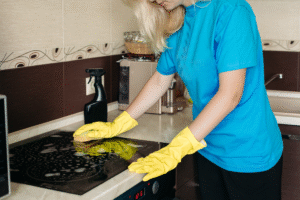
Kitchen
The kitchen accumulates grime the fastest. Grease buildup and stains are constant.
What to do:
- Empty the refrigerator completely and wipe each shelf separately
- Check expiration dates and discard unused products
- Clean the inside of the oven, not just the exterior
- Degrease the range hood and inspect the filter
- Wipe both the exterior and interior of cabinets
- Move small appliances and clean underneath them
Bathroom
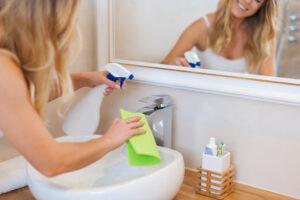
The bathroom delivers one of the most noticeable transformations during a deep clean. Everything feels fresh and sanitized.
Don’t skip:
- Scrubbing grout lines between tiles
- Checking for mold buildup
- Disinfecting handles and light switches
- Washing or replacing the shower curtain
- Emptying cabinets fully before reorganizing
- Disposing of expired products
Bedroom
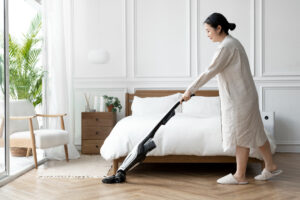
- Vacuum and air out the mattress
- Wash pillows and covers
- Sort clothing in the closet
- Check the space under the bed
- Remove clothes you haven’t worn in the past season (from the bedroom closet or wardrobe)
Living room
The living room collects items without you noticing: toys under cabinets, food crumbs, stains on the sofa, wilted plants, dust in overlooked corners.
- Vacuum under the sofa and other furniture
- Clean remote controls and electronic devices
- Wipe shelves and books
- Check unused cables and devices, and wipe down all cables (yes, dust builds up even on a simple cord)
- Clean the upholstery or wash sofa covers
Wipe baseboards and mop the floor at least twice. If you have carpeting or area rugs, this is the right time for a professional cleaning. The difference is visible immediately.

Hallway
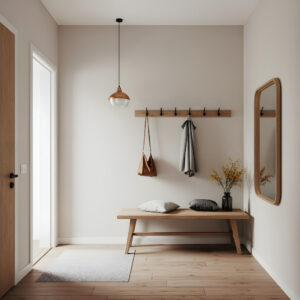
In many apartments, the entryway becomes temporary storage—especially with dozens of pairs of shoes accumulating over time.
- Sort through footwear
- Remove winter accessories
- Check drawers or small shelves, especially if you have a closet near the entrance
- Reorganize the entry area for the warmer season
- Wash the entry mat
- Thoroughly clean the coat rack or the inside of the closet where you keep outerwear
Hacks for Faster, Smarter Spring Cleaning
a) Set a realistic schedule and declutter first
Don’t try to finish everything in one day. Plan for 2–4 days, depending on the size of your home.
In every room, sort items into:
- Keep
- Donate
- Discard
- Move to seasonal storage
Decluttering should always happen before deep cleaning. If you start wiping and vacuuming right away, you’ll just move items from one place to another—and double your workload.
b) Clean from top to bottom
This is a core rule in any deep cleaning checklist. Dust falls, so start with shelves, light fixtures, and upper surfaces. Finish with vacuuming and mopping floors.
c) Prioritize visual impact and health
Not all tasks deliver the same results. The fastest visible improvements come from:
- Airing out every room
- Vacuuming carpets and mattresses
- Cleaning the air conditioning filter
- Wiping frequently touched surfaces
d) Use a self storage unit to reduce volume
This is the part most checklists overlook. In an apartment in Manhattan, Queens, or Brooklyn, much of the clutter comes from items you don’t use daily.
You can store in a self storage unit in NYC:
- Off-season clothing
- Bulky blankets
- Luggage
- Sports equipment
- Renovation materials
- Rarely used appliances
- Seasonal décor
- Car accessories
Removing unused items can reduce in-home volume by up to 40–50%.
The result:
- Fewer items to dust
- Fewer cluttered surfaces
- More open space
- Less visual stress
Cleaning becomes significantly faster and more efficient when you stop forcing every item you want to keep to remain inside the apartment.
For bulky clothing storage, a climate-controlled storage unit helps prevent moisture and odors. If you’re unsure what size fits your needs, consult our guide on storage unit sizes.
FAQ
What is the difference between spring cleaning and regular cleaning?
Regular cleaning maintains clean surfaces. Spring cleaning involves a complete deep cleaning checklist, plus reorganization and decluttering.
How long should spring cleaning take?
For an NYC apartment: 2–4 days, depending on volume.
Should I declutter before or after cleaning?
Always before. Cleaning around unnecessary items doubles your workload.
What is included in a deep cleaning checklist?
A proper deep cleaning checklist includes:
- Cleaning the inside of drawers and cabinets
- Cleaning or replacing filters
- Washing large textiles
- Cleaning under furniture
- Disinfecting frequently touched areas
- Checking areas often ignored during routine cleaning
How do I keep the space organized after spring cleaning?
Maintain seasonal rotation. Don’t allow rarely used items to return to active space.
Review closets at every seasonal transition and use a printable spring cleaning checklist to stay on track.
Is a self storage unit worth it in NYC during spring cleaning?
For small spaces, yes. It reduces in-home volume and makes cleaning faster and easier to maintain.