
Here is the truth nobody tells you before you sign that lease: a small NYC apartment does not feel small on move-in day. It feels cozy. Then the second bookshelf arrives, your partner moves in, winter coats need somewhere to live, and suddenly your “cozy” studio feels like a storage unit you also sleep in.
I lived in a 400 square foot apartment for three years. I tried every hack, bought every organizer, and made plenty of expensive mistakes. In this guide, I’ll walk you through how to organize a small NYC apartment room by room — what actually works, what is a waste of money, and how to know when it is time to stop fighting your square footage and rent a storage unit instead.
What Makes Organizing a Small NYC Apartment Different?
Organizing a small NYC apartment is different from general decluttering advice because the constraints are uniquely severe: pre-war buildings with shallow closets, open-plan studios with zero room division, and no garage, basement, or attic to absorb overflow. The average apartment in New York City measures just 715 square feet, according to StorageCafe — and many renters live in studios well under 500.
The standard advice — “buy more bins,” “get a bigger bookshelf” — fails here because you are not dealing with disorganization. You are dealing with a fundamental shortage of storage architecture. The strategies that work in NYC prioritize three things: vertical space, multi-use furniture, and honest triage about what actually needs to live in your home.
Vertical storage is the practice of using wall height rather than floor area to hold items, which frees up the limited square footage of a small apartment floor plan.
Multi-use furniture refers to pieces that serve two or more functions simultaneously — a bed frame with built-in drawers, an ottoman that opens for blanket storage, a bench that holds shoes.
This guide covers every room in a typical NYC apartment. Each section includes a quick-win action you can do today and a longer-term upgrade to consider.
Self Storage in NYC — what does a unit actually cost per month?
Living Room: Go Vertical and Eliminate Visual Noise
The living room in a small NYC apartment is almost always doing too many jobs: sitting area, home office, overflow closet, and sometimes sleeping space if you are in a studio. The first move is not to add more storage — it is to reduce what you are storing.
Start with a full audit. Take everything off surfaces and out of cabinets and place it on the floor. You will immediately see duplicates, things you forgot you owned, and items that do not belong in this room at all. Donate or discard anything you have not touched in six months.
Once you know what you are keeping, build upward. Tall, floor-to-ceiling bookshelves are the single best investment in a small living room — they hold a remarkable amount without consuming floor space. Floating wall shelves above furniture lines (above the sofa, above the TV console) can add the equivalent of an entire extra surface.
Quick win: Install three floating shelves on one empty wall this weekend. The cost is under $60 and the return in storage capacity is immediate.
Upgrade: Replace your coffee table with one that has internal storage. Ottomans with lift-off lids are ideal for extra throw blankets, magazines, and charging cables — items that clutter surfaces but have no natural home.
A note on open-plan layouts: if your living room and bedroom share the same space, visual noise is your enemy. Use matching storage bins or baskets so disparate items read as a single coherent unit rather than scattered clutter.
Kitchen: Treat Every Inch as Rentable Real Estate
The kitchen in a New York City apartment may be the toughest room to organize, because the problems are often structural — not enough cabinets, no pantry, a layout designed for one person who never cooks. But most small kitchen chaos comes from one source: too many things competing for the same limited space.
The rule that changed my kitchen: If you use something less than once a month, it does not live in your kitchen. That KitchenAid stand mixer, the enormous roasting pan, the waffle iron you use twice a year — these are exactly the kinds of items that consume half your cabinet space while you fight for room to store everyday plates.
For the items that stay, go vertical. Magnetic knife strips mounted on the wall free up an entire drawer. A pot rack suspended from the ceiling (or a tension rod in a cabinet used as a pan divider) reclaims shelf space. Stackable containers replace mismatched Tupperware that nests inefficiently.
Cabinet doors are storage. An over-the-door organizer inside your pantry or cabinet door holds spices, foil boxes, cleaning supplies, or snacks. This is one of the most underused surfaces in any NYC kitchen.
Inside your cabinets: Tiered shelf risers double the usable surface of a single shelf. Lazy Susans in corner cabinets eliminate dead zones. Clear bins grouped by category (baking, snacks, canned goods) mean you stop buying duplicates of things hiding behind other things.
Quick win: Clear one junk drawer completely. Sort its contents into three piles: keep, relocate, discard. Assign every kept item a permanent location.
Upgrade: Move rarely-used appliances and entertaining serveware to a self storage unit. You only need your kitchen to function for daily life — not for the twice-a-year dinner party.
Bedroom: Build Storage Under, Over, and Around the Bed
The bedroom is where most small-apartment organization breaks down, because it absorbs everything that has no other home. Clothes with no closet space end up on chairs. Shoes pile up near the door. Seasonal items take up floor space that should feel like breathing room.
Under the bed is your most underused storage zone. A queen bed frame elevated even modestly off the floor can store a remarkable volume. Flat rolling bins on wheels are ideal for off-season clothing, extra bedding, and shoes. Vacuum-sealed bags compress bulky items like winter coats and comforters to a fraction of their original size — a single bag can hold an entire season’s worth of heavy clothes.
If you are choosing a new bed frame, prioritize one with built-in drawers. This effectively adds a dresser’s worth of storage without adding any square footage.
Closets need a system, not more hangers. The two highest-impact closet upgrades are slim velvet hangers (which can nearly double hanging capacity compared to plastic hangers) and a second hanging rod installed below the first for shirts and folded pants. Add a shelf above the hanging rods if head clearance allows — labeled bins up there can hold seasonal items, spare linens, or accessories.
For shoes, a clear pocket organizer hung on the inside of the closet door handles a full week’s rotation without consuming floor space.
Quick win: Swap all your plastic hangers for slim velvet ones. You will gain significant hanging space in under an hour.
Upgrade: Rotate your wardrobe seasonally. Store off-season clothing in a storage unit rather than compressing your closet year-round. You will be surprised how much better a closet that holds only what you are actually wearing right now feels to use every day.
Bathroom: Small Fixtures, Big Organizational Wins
The bathroom in a small NYC apartment is rarely large enough for serious storage — but the gains here come quickly because the bathroom has several consistently underused surfaces.
Over the toilet: A freestanding over-toilet shelf unit (no drilling required in a rental) adds multiple shelves above one of the few truly unused vertical zones in most bathrooms. This is where extra toilet paper, backup toiletries, and cleaning supplies can live.
Behind the door: A hook strip or an over-the-door rack handles towels, robes, and accessories without touching your limited wall space.
Under the sink: This cabinet is often chaos. Two-tier pull-out organizers or small baskets grouped by category (hair, skincare, medicine) transform the under-sink cabinet from a pile into a functional pantry.
In the shower: A tension-rod corner caddy or a magnetic strip for razor storage keeps the shower floor clear and the walls uncluttered.
Quick win: Declutter your medicine cabinet and under-sink cabinet at the same time. Discard expired medications and products you have not used in six months. The freed space will feel dramatic.
Entryway: Control the Chaos at the Source
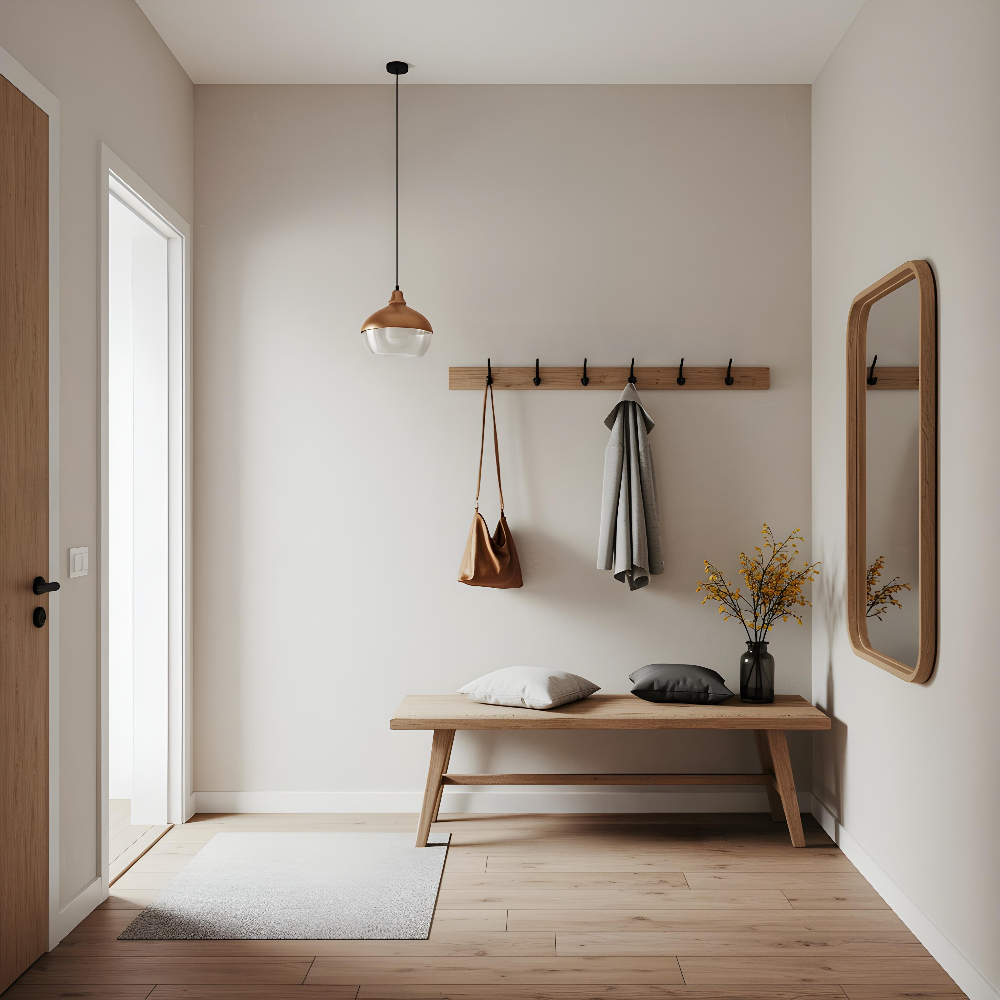 The entryway in a NYC apartment is usually not a room — it is a strip of floor between the front door and the rest of your life. But it is the point of entry for daily chaos: keys, bags, mail, shoes, coats.
A wall-mounted hook strip handles coats, bags, and keys in seconds. A narrow bench or shoe rack keeps footwear from spreading. A small tray or bowl for mail near the door prevents the paper-pile cycle.
If your entryway is truly tiny, a floating shelf at shoulder height with hooks below takes up almost no floor space and handles the daily-use items that otherwise pile up on your kitchen counter or nearest chair.
Quick win: Install a five-hook wall strip near the door. This single item eliminates the “where are my keys” problem permanently.
When to Use a Self Storage Unit: A Simple Decision Framework
No amount of organization can solve a fundamental math problem: some apartments simply cannot hold everything their residents own. Before you feel guilty about this, know that one in three Americans currently uses self-storage, and renters are more likely than homeowners to rely on it — because rental apartments rarely come with the storage infrastructure that houses do.
Here is the framework I use to decide what should move to a storage unit:
Store it if:
- You use it fewer than four times per year (holiday decorations, seasonal sports equipment, camping gear)
- It is large and hard to maneuver inside the apartment (bicycle, air conditioner units, holiday tree)
- It has sentimental value but no daily function (inherited furniture, childhood keepsakes, artwork not currently displayed)
- It is a professional tool or inventory for a side business
- You are mid-transition — between apartments, waiting for a renovation, or uncertain about a long-term move
Keep it at home if:
- You use it weekly or more
- Retrieval from storage would be inconvenient enough to discourage use
- It contributes to the comfort or livability of your daily environment
Let it go if:
- You have not thought about it in over a year
- A replacement would cost less than six months of storage fees
- You are storing it only because you feel guilty about discarding it
The most common mistake I see is people storing things they should donate and donating things they should store. A self storage unit is not a guilt-free discard bin — it is a cost-effective extension of your home for items that genuinely need to exist but do not need to be in your apartment right now.
Self Storage in Queens — convenient locations across the borough
Full-Service Storage — we pick up and deliver, so you never have to haul boxes
Frequently Asked Questions
How do I organize a studio apartment with no storage?
A studio with no built-in storage requires you to build storage into your furniture and walls. Prioritize a bed frame with drawers, a sofa or ottoman with internal storage, and floor-to-ceiling bookshelves. Use vertical wall space aggressively with floating shelves and over-the-door organizers. For items you use infrequently, a small self storage unit — even a 5×5 — can hold a surprising amount and keeps your studio feeling livable.
What is the most effective storage solution for a small NYC closet?
The most impactful changes for a small NYC closet are switching to slim velvet hangers (which nearly doubles hanging capacity), adding a second hanging rod for shirts and folded items, and installing labeled bins on the top shelf for seasonal storage. Clear bins with labels prevent the “I forgot I owned this” problem that leads to unnecessary purchases.
Is self storage worth it for a NYC apartment?
Self storage is worth it when the cost of renting a unit is lower than the quality-of-life cost of living in a cluttered space — which for most NYC apartments is a very low bar. A 5×5 unit in many NYC neighborhoods starts around $100–$120 per month, and holds enough to meaningfully free up bedroom and closet space. For seasonal items alone, the math usually works out.
How often should I declutter my NYC apartment?
A seasonal declutter — four times per year — is the most manageable cadence for a small NYC apartment. Each season, reassess your wardrobe, rotate out any seasonal items (sending them to storage or donating), and clear any surfaces that have accumulated clutter. A full room-by-room reset once per year prevents the kind of slow accumulation that makes apartments feel permanently overwhelmed.
What furniture is best for a small NYC apartment?
The best furniture for a small NYC apartment serves multiple functions. A bed with built-in drawers replaces a dresser. An ottoman with storage replaces a coffee table and a blanket bin. A wall-mounted fold-down desk replaces a full office desk for remote workers. When buying new furniture, prioritize pieces that provide storage as a secondary function — every square foot has to earn its place.
What should I put in a storage unit vs. keep in my apartment?
Keep in your apartment anything you use weekly or that contributes to daily comfort. Move to a storage unit anything you use less than four times a year: holiday decorations, seasonal sporting equipment, off-season clothing, large sentimental items, and anything in a transitional state (items from a recent move, inherited furniture you are not ready to part with). Discard anything you are keeping only out of guilt.
Conclusion: Work With Your Space, Not Against It
Organizing a small NYC apartment is not about finding the perfect bin or the magical shelving system. It is about being honest with yourself about what you own, where it actually belongs, and what work it is doing in your life.
The room-by-room approach works because it breaks an overwhelming problem into manageable ones. Do the living room this weekend. Do the closet next weekend. Progress compounds.
Key takeaways:
- Vertical storage — shelves, wall mounts, over-door organizers — is the highest-return investment in any small apartment
- Multi-use furniture pays for itself in the square footage it saves
- Seasonal rotation is the single habit that prevents closet overwhelm from returning
- A self storage unit is not a last resort — it is a practical tool that one in three Americans already uses
- The decision framework: store what you use less than four times per year, keep what you use weekly, let go of the rest
Ready to reclaim your apartment? If you have items that belong in storage but not in your daily space, Moishe’s Self Storage offers convenient locations across Queens and Brooklyn with flexible unit sizes starting at 5×3.