
Some items can live happily in a standard storage unit for years, regular clothing, metal tools, lamps, and hardcover books among them. But other items are far more sensitive to temperature swings and humidity than most people realize, and storing them without climate control can cause damage that’s impossible to reverse. Here are 11 items that need a regulated environment in self-storage.
1. Electronics
Electronics are vulnerable to both temperature extremes and humidity. Repeated heat and cold cycles degrade battery cells, reducing capacity and shortening lifespan. Cold can also make plastic housings brittle and prone to cracking. Moisture is the more immediate threat, even moderate humidity can corrode circuit boards and connectors. If you’re storing anything with a battery or a screen, a climate-controlled unit is the right call. Battery University notes that both heat and cold accelerate capacity loss in lithium-ion cells, which is why manufacturers publish a separate storage temperature range in the first place.
2. Art
Fine art is among the most temperature-sensitive items you can store. High heat can fade or liquefy certain inks and cause chemical reactions in pigments. It also creates thermal stress on canvas, expanding the material in ways that lead to warping or cracking over time. Cold temperatures present the opposite problem: they can make canvas and paper brittle and reduce moisture to the point where materials crack. Store fine art in a climate-controlled unit and keep it away from direct contact with walls or floors. The Getty Conservation Institute has found that fluctuation, not just extremes, is often what causes the most long-term damage to paintings and works on paper.
RELATED: Tips On How To Prepare Precious Artwork For Long Term Storage
3. Wine
 Wine is particularly unforgiving of temperature instability. Heat accelerates the aging process, dulling flavor and aroma in ways that can’t be undone. Cold is less damaging but can cause the liquid to expand and push the cork, introducing air into the bottle. The ideal storage range for most wines is 45-65°F with consistent humidity, a range Wine Spectator’s own storage guidelines confirm. A standard unit that heats up in summer and cools down in winter will shorten the life of any serious collection.
4. Leather Furniture
Genuine leather reacts poorly to both heat and moisture. High temperatures dry out the natural oils in the leather, leaving it stiff and prone to cracking. Humidity introduces mold and mildew risk, which can permanently stain or degrade the surface. A climate-controlled unit protects the material’s suppleness and prevents the kind of cracking that makes leather furniture look years older than it is.
5. Wood Furniture
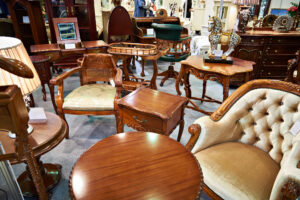
Wood expands when it absorbs moisture and contracts when it dries out. In a non-climate-controlled unit, repeated cycling between humid summers and dry winters can cause joints to loosen, surfaces to warp, and finishes to peel. Over time, persistent moisture exposure can lead to rot. Cool, dry, stable conditions are what wood furniture needs for long-term storage, the same stability conservation guidelines from NEDCC recommend for wood objects generally.
6. Fine Clothing (Lace or Leather)
Delicate fabrics, lace, leather, silk, and vintage textiles, are susceptible to both temperature extremes and humidity. Heat can cause fibers to weaken and colors to bleed. Cold and moisture together create the conditions for mildew growth, which is extremely difficult to remove from fine fabrics. Store these items in a climate-controlled unit, ideally in breathable garment bags rather than sealed plastic.
RELATED: How To Store Hanging Clothing In A Mini Storage Unit
7. Antiques
Antiques are often made from multiple materials, wood, metal, fabric, paint, each of which responds differently to temperature and humidity. That mismatch is what causes damage: materials expand and contract at different rates, loosening joints, cracking finishes, and stressing structural elements. Pieces with inlay, gilding, or painted surfaces are especially at risk. Climate-controlled storage is the standard recommendation for anything with significant age or monetary value.
8. Musical Instruments
Wood-bodied instruments like guitars, violins, and cellos are built with precise tolerances that temperature and humidity directly affect. Dry conditions shrink the wood, raising action and creating cracks. High humidity can swell the body, alter the neck angle, and cause glue joints to fail. Beyond the structural damage, tonal quality changes in ways that can require expensive professional correction. Keep instruments in a stable environment, ideally between 45-55% relative humidity, the same range D’Addario recommends for guitars and other wood-bodied instruments.
9. Vinyl Records

Vinyl is heat-sensitive in a specific way: temperatures above around 140°F can cause warping that permanently affects playback. More commonly, repeated cycles between cool and warm air cause condensation on the record surface and on the paper sleeves, which can lead to mold growth and sleeve damage over time. Records tolerate cool, stable temperatures well, Library of Congress preservation guidance on disc care makes the same point, the key is avoiding moisture and direct temperature swings when moving them between environments.
RELATED: How to Store Vinyl Records in NYC
10. Makeup
Cosmetics are formulated to be stable at room temperature, and most start breaking down outside that range. Heat causes emulsified products, foundations, creams, lip products, to separate as the oil and water components unmix. Some can be stirred back together; others are permanently compromised. Wax-based products like lipsticks and balms can melt and deform. Storing makeup in a climate-controlled unit protects both the formulation and the packaging.
11. Photographs
Photographs are vulnerable to both humidity and temperature extremes. High moisture causes emulsion to separate from the paper base, the image layer physically lifts away and cannot be reattached. Heat accelerates chemical degradation, causing fading and discoloration. Cold alone is less harmful, but temperature fluctuations that cause condensation are particularly damaging. For long-term photo preservation, a climate-controlled unit with stable humidity is the safest option, per the Library of Congress’s own photograph care guidelines.
Frequently Asked Questions
What temperature is too hot for a storage unit?
There’s no single cutoff, but once a space regularly climbs above 85-90°F, the items covered above (electronics, wine, wax-based cosmetics, vinyl) start to be at real risk. NYC summers routinely push non-climate-controlled spaces into that range, which is the main reason to choose climate control for anything temperature-sensitive.
What’s the difference between temperature-controlled and climate-controlled storage?
Temperature-controlled storage keeps the space within a set temperature range but doesn’t actively manage humidity. Climate-controlled storage manages both temperature and relative humidity, which matters for anything prone to warping, mold, or corrosion, not just melting or freezing.
Do I need climate control for regular clothes, books, or kitchenware?
Usually not. Everyday items like regular clothing, metal tools, lamps, and hardcover books tolerate normal temperature swings fine in a standard unit. Climate control matters most for the items on this list: things with batteries, organic materials like wood and leather, or anything with fine detail work.
Can heat damage stored items even over just a few months?
Yes, for some categories. Wax-based cosmetics, electronics batteries, and vinyl records can be damaged by a single hot stretch, not just years of cumulative exposure. Wood, leather, and art are more about repeated cycling over time, but even a short, severe heat spike can cause visible damage.
How much does climate-controlled storage cost in NYC?
Pricing depends on unit size and location. Check current specials or contact a Moishe’s location directly for up-to-date climate-controlled pricing at the Manhattan/Bronx or Queens/Brooklyn facilities.
Where can I get climate-controlled storage in NYC?
Moishe’s Self Storage offers climate-controlled units at facilities serving Manhattan, The Bronx, Queens, and Brooklyn. See climate-controlled storage in New York for details.
Moishe’s Self Storage offers climate-controlled units across our facilities in Manhattan/The Bronx and Queens/Brooklyn. Whether you’re storing wine, fine art, antiques, instruments, or anything else on this list, our New York City locations offer the controlled environment these items need, with flexible terms starting at one month.
If you are located in Jersey City, NJ, and need controlled environment document storage look up our partner company GRM.
For digital document management and enterprise content management solutions, visit our partner VisualVault.