

Knowing your rights as a tenant in New York City will save you from unrealistic expectations and headaches when looking for an apartment in the big city. We outlined 9 things that are allowed and not allowed in a Manhattan, Bronx, Brooklyn, and Queens resident apartment.
Title 27 outlines the legal requirements for construction and maintenance for the “building code of the city of New York.”
If you’re apartment hunting or already settling into a new place, our guide to small studio apartment living in NYC has more on making the most of a compact NYC unit.
What is a legal bedroom in NYC?
To have a “bedroom” in New York City, it must satisfy these legal requirements according to section §C26-1205.7 of Title 27 subchapter 11:
- Minimum dimensions of habitable rooms. Habitable rooms shall have a minimum clear width of eight feet in any part; a minimum clear area of eighty square feet and a minimum clear ceiling height of eight feet for the minimum area, except:
- A room which complies with the requirements for natural light and ventilation and in addition has an opening of not less than sixty square feet into an immediately adjoining room may have a minimum floor area of seventy square feet and a least horizontal dimension of seven feet;
- A dining space which has legally required ventilation, and in which the window has an area of at least one-eighth the floor area of such dining space;
- One-half the number of bedrooms in a dwelling unit containing three or more bedrooms may have at least minimum dimension of seven feet;
- A room in a class B multiple dwelling as defined in section four of the multiple dwelling law which may have a minimum floor area of sixty square feet and at least horizontal dimension of six feet.
What a landlord is required to provide
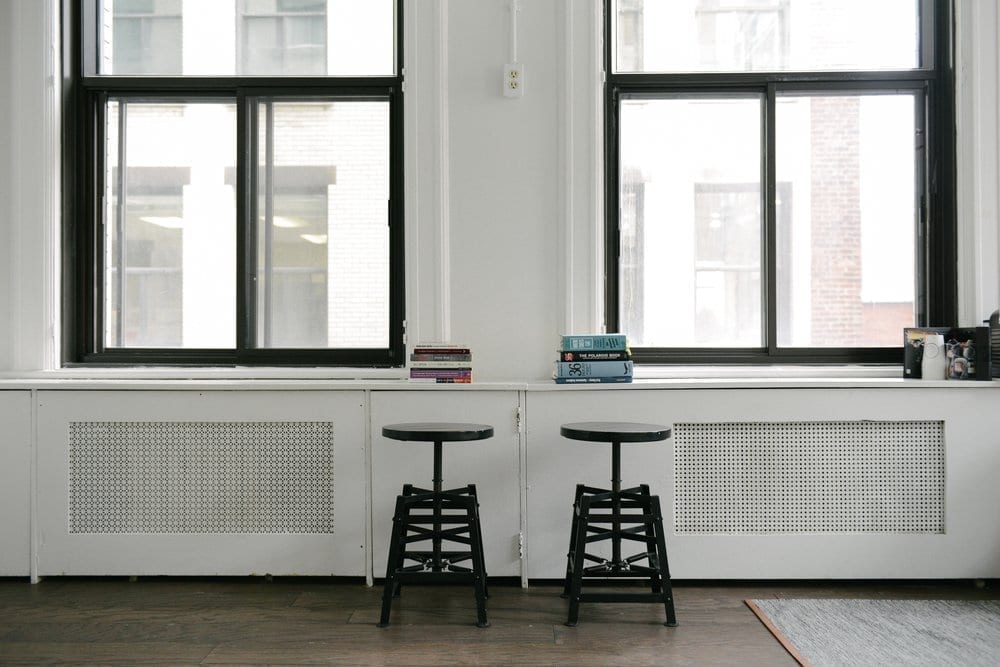
A landlord is required to provide you with the basic necessities to live in an inhabitable home or apartment. Here’s what they have to provide:
1. Continuous amenities
If you were provided amenities when you moved in and it breaks, the landlord is required to fix it. A dishwasher, as an example, must be replaced or fixed. Otherwise, the tenant may qualify for a rent credit.
2. Fire safety and carbon monoxide detectors
There must be at least one carbon monoxide detector and smoke detector in each apartment. For larger living areas, apartments are required to have self-closing doors and a fire escape plan. It’s illegal to lock a fire escape window with a key lock or double cylinder lock.
3. No pests in the property
It’s likely that you have seen a bug or two in your apartment from time to time. Landlords are, however, required to maintain a livable environment without rodents or cockroaches for their tenants.
If mice, rats, and/or roaches are still around in either an apartment or common area, it will result in a Class C (immediately hazardous) violation.
For bedbugs, New York State law required landlords to disclose infestation history dating back to one year.
4. Heat, and hot and cold water
New York’s heat season runs from October 1 to May 31. During that window, landlords must keep apartments at least 68°F between 6am and 10pm whenever it’s below 55°F outside, and at least 62°F overnight (10pm to 6am) no matter what the temperature is outside. Hot water is a separate, year-round requirement: it has to be available 365 days a year at a minimum of 120°F. These figures come directly from HPD’s heat and hot water guidance, worth bookmarking if you ever need to file a complaint.
5. Windows and/or lighting
Every room, including kitchens and bathrooms, has to “have at least one window opening directly upon a street or upon a lawful yard, court, or space above a setback upon the same lot.” It is illegal to offer a residential room without a window.
6. A lockable front door with a peephole
A locked door is a safety concern and should be taken very seriously. A peephole allows the resident to know who’s outside before opening the door. A chain door latch should be included as well, so the tenant can partially open the door to outside people.
7. Finished walls
Paint or wallpaper must be on the walls and must be replaced every 3 years. All costs are paid by the landlord unless a tenant asked for a specific color, then the price can be passed to the tenant. No lead paint is allowed on the walls.
8. Window guards
Window guards are required in any apartment where a child 10 years of age or younger lives or regularly visits, not just households with a child who happens to be exactly 10. This comes from HPD’s window guard rule under Local Law 57.
9. Mail service
Landlords are required to upkeep approved mailboxes for tenants or arrange for mail to be delivered to them.
What landlords are NOT required to provide
Just as important as knowing what your landlord has to give you is knowing what they don’t. None of the following are legal violations if they’re missing, they’re standard practice at best, not requirements.
1. Refrigerator and stove
NYC’s Housing Maintenance Code only requires a landlord to provide a toilet, bathtub or shower, a washbasin, and a kitchen sink, along with working electric, water, and gas hookups. A refrigerator and stove are standard practice rather than a legal requirement, landlords include them because it helps rent the unit faster, not because the law makes them. If one is already in the apartment, or your lease specifically includes it, the landlord does have to keep it working.
2. Air conditioning
Most existing NYC apartments aren’t required to have air conditioning today. The city passed a cooling mandate, Int 0994-2024, but it doesn’t take effect until June 1, 2030, and tenants can’t start formally requesting installation until March 1, 2028. Until then, AC is on you unless your lease says otherwise.
3. Washer/dryer, dishwasher, or microwave
Same rule as the fridge and stove: common, not mandated. If your unit has one, it falls under the “continuous amenities” rule above, meaning the landlord has to keep it working once it’s there.
4. Window screens, shades, or curtain rods
Not required. If you want them, they’re on you to buy and install.
5. Light bulbs inside your apartment
Landlords are responsible for lighting in common areas like hallways and stairwells, not for replacing bulbs inside your own unit.
6. Extra locks or replacement keys
Your landlord has to provide one working lock on your entry door. A second lock, a chain you want to add yourself, or a replacement key if you lose yours, that’s your own cost.
7. Reimbursement for stolen or damaged belongings
Not automatic. That’s what renters insurance covers, a landlord is only on the hook if you can show their negligence directly caused the loss.
8. Closets or built-in storage
There’s no legal requirement to include closet space, which is a big part of why off-site storage is such a common workaround in older NYC buildings.
What to do if your landlord isn’t meeting these requirements
Every NYC residential lease carries an implied Warranty of Habitability under New York Real Property Law § 235-b, guaranteeing your apartment is fit to live in and free of conditions dangerous to your health or safety. It can’t be waived, even if your lease says otherwise.
If your landlord isn’t meeting one of the requirements above, here are the real options, roughly in the order Legal Aid Society recommends trying them:
- File a 311 complaint. This sends a city inspector to document the violation, which strengthens any case that follows.
- Start an HP action. A housing court proceeding that legally compels your landlord to make repairs, with court-ordered timelines based on severity: 24 hours for immediately hazardous (“C”) violations, 30 days for hazardous (“B”) violations, 90 days for lower-priority (“A”) violations.
- Withhold rent, carefully. You can withhold rent if you’ve notified your landlord, given reasonable time to fix the problem, and set the rent aside instead of spending it. It’s not risk-free: your landlord can still bring a non-payment case against you, and you’d need to raise the lack of repairs as your defense in court.
- Repair and deduct, emergencies only. Fixing something yourself and deducting the cost from rent is allowed only for conditions threatening life, health, or safety, and only after proper notice. Skip a step and you risk an eviction case instead of a fix.
If you’re in a rent-regulated apartment, there’s an additional option: filing a complaint for a decrease in services with NYS Homes and Community Renewal.
Frequently Asked Questions
What temperature must my NYC apartment be kept at?
During heat season (October 1 to May 31), your apartment must be at least 68°F during the day (6am-10pm) whenever it’s below 55°F outside, and at least 62°F overnight (10pm-6am) regardless of the outside temperature. Hot water must stay at a minimum of 120°F year-round.
What age requires window guards in an NYC apartment?
Any apartment where a child 10 years of age or younger lives or regularly visits is required to have window guards under NYC’s Local Law 57, not just a household with a child who is exactly 10.
Is my landlord required to fix a broken dishwasher or other amenity?
Yes, if the amenity was provided when you moved in. If it breaks and isn’t fixed or replaced, the tenant may qualify for a rent credit.
Can my landlord charge me for repainting my apartment?
No, painting is required every 3 years and the landlord pays for it, unless you specifically request a non-standard color, in which case that cost can be passed to you.
What counts as a legal bedroom in NYC?
Under Title 27, a habitable room needs a minimum clear width of 8 feet, a minimum clear area of 80 square feet, and a minimum ceiling height of 8 feet, with some narrower exceptions for rooms with extra light and ventilation.
What should I do if my landlord isn’t meeting these requirements?
You can file a complaint with HPD through 311 or the NYC HPD tenant rights portal. Keep records (photos, dates, written requests to your landlord) before filing. For persistent issues, an HP action in housing court can legally compel repairs.
Is my landlord required to provide air conditioning in NYC?
Not yet for most existing apartments. NYC’s cooling mandate doesn’t take effect until June 1, 2030, and tenants can’t formally request AC installation until March 1, 2028. Until then, air conditioning is the tenant’s responsibility unless the lease says otherwise.
Can I withhold rent if my landlord won’t make repairs?
You can, but carefully: you need to notify your landlord, give reasonable time to fix the problem, and set the withheld rent aside rather than spending it. Your landlord can still file a non-payment case against you, and you’d need to raise the lack of repairs as your defense. An HP action or 311 complaint is usually the lower-risk first step.
Contact Moishe’s Self Storage if you’re looking for cheap storage units in New York City to hold wine, art, or other things. Our Manhattan/The Bronx and Queens/Brooklyn Storage Facilities are conveniently located near you. We offer over 20 different storage unit sizes, available to individuals, students, and businesses. Reserve your room, view specials, or contact us.
Moving into a new place, or getting ready to? Our guide to making moving easier covers what to line up before move-in day.