
Books are cherished possessions that carry both sentimental and financial value. Whether you’re an avid reader, collector, or simply need to clear up some space, properly storing your books is essential to keep them in good condition over the long term. At Moishe’s Self Storage, we provide optimal storage solutions to protect your precious collections, ensuring they stay safe and well-preserved.
Quick answer: To store books long term, dust them, make sure they’re completely dry, and pack them flat or spine down in small, sturdy boxes, with acid-free boxes for anything valuable. Keep them off the floor, out of direct light, and somewhere cool with steady humidity between roughly 30 and 60 percent. Avoid garages, attics and basements for books you care about. A climate-controlled storage unit is the safest choice for long stays.
In this guide, we’ll discuss the best ways to store books for the long term and how Moishe’s Self Storage can assist you in preserving your literary treasures.
Why Proper Book Storage Matters
Books are delicate items that can easily be damaged by factors like humidity, temperature fluctuations, pests, and improper handling. If you want to keep your books in pristine condition for years to come, it’s crucial to store them correctly. Whether you are moving, decluttering, or just need extra space, a climate-controlled storage unit at Moishe’s Self Storage can help protect your books from damage.
Step 1: Clean and Prepare Your Books

Before storing your books, make sure they are clean and dust-free:
Dust each book with a soft, dry cloth to remove any dirt. The Library of Congress suggests a duster without fragrances or chemicals, or a vacuum with a soft brush attachment on low suction.
Check for moisture and ensure pages are completely dry to prevent mold.
Take out bookmarks, pressed flowers, newspaper clippings and sticky notes. They leave stains and acid marks on the pages over time.
If your books have delicate covers or pages, consider using acid-free paper as a protective layer.
Step 2: Choosing the Right Storage Containers

Selecting the appropriate storage containers is vital for protecting your books:
Plastic Bins vs. Cardboard Boxes: While cardboard boxes are affordable, they may attract pests and are susceptible to moisture damage. Plastic containers with tight-fitting lids protect books from water and pests, but they also trap whatever moisture is inside. In a damp space that can lead to mold, so only seal books in plastic when they’re fully dry, add silica gel packs, and use them in a space where the humidity stays steady. For valuable books stored for years, the Library of Congress recommends acid- and lignin-free boxes. See the comparison below.
Choose Small Boxes: Books are heavy. A small box filled with books is easier and safer to lift than a large one, and it’s less likely to split or crush the books at the bottom.
Avoid Overpacking: Do not cram books into containers as this can cause spines to bend and pages to crease. Leave a little room to allow for air circulation.
Step 3: How to Properly Pack Books

When packing your books, follow these best practices:
Flat or Upright: Books can be stored flat (stacked) or upright (like on a shelf). If you pack them flat, put the heaviest and largest books on the bottom. If you choose to store them upright in a box, the Library of Congress suggests packing them spine down, and make sure they are tightly packed to avoid leaning, which can damage spines. Never pack books with the spine facing up or resting on the fore-edge.
Fill the Gaps: Pad out empty space in the box with packing paper so the books can’t shift, and keep the weight centered.
Wrap Valuable Books: For rare or valuable books, wrap each one individually in acid-free tissue or paper. If you’re moving them, bubble wrap can go on the outside of that layer, but don’t leave bubble wrap or plastic directly against the cover for long-term storage.
Label Containers: Clearly label each box or container with its contents to make it easy to locate specific books when needed. Write on the box or on a tag, never on a label stuck to the book itself.
Step 4: Storing Books in a Storage Unit

For long-term storage, it’s best to use a climate-controlled storage unit to protect your books from temperature and humidity fluctuations:
Climate-Controlled Units: Moishe’s Self Storage offers climate-controlled units, which is essential for preventing mold, mildew, and paper degradation that big swings in temperature and humidity cause.
Elevate Your Boxes: Place book containers on pallets or shelves to keep them off the floor. This protects them from any potential water damage.
Elevate Your Boxes: Place book containers on pallets or shelves to keep them off the floor. This protects them from any potential water damage. Metal shelving is better than wood for long stays, since the Library of Congress notes that acids in wood can migrate into books. If you use wood shelves, line them first.
Avoid Direct Sunlight: Exposure to light can cause book covers and pages to fade. Store your containers away from windows or any sources of direct light.
Step 5: Long-Term Book Preservation Tips
If you’re storing books for years, consider these additional tips:
Use silica gel packs or desiccants in containers to absorb moisture.
Regularly check on your storage unit to ensure no pests or mold have infiltrated. Keep food and drinks out of the space, since crumbs attract the insects that feed on paper and glue.
If a box ever gets wet, take the books out and let them air dry right away. The Library of Congress says books that can’t be air dried within two days should be frozen until they can be dried properly.
Visit your self-storage unit every few months to inspect your books and retrieve anything you need.
What Temperature and Humidity Are Best for Storing Books?
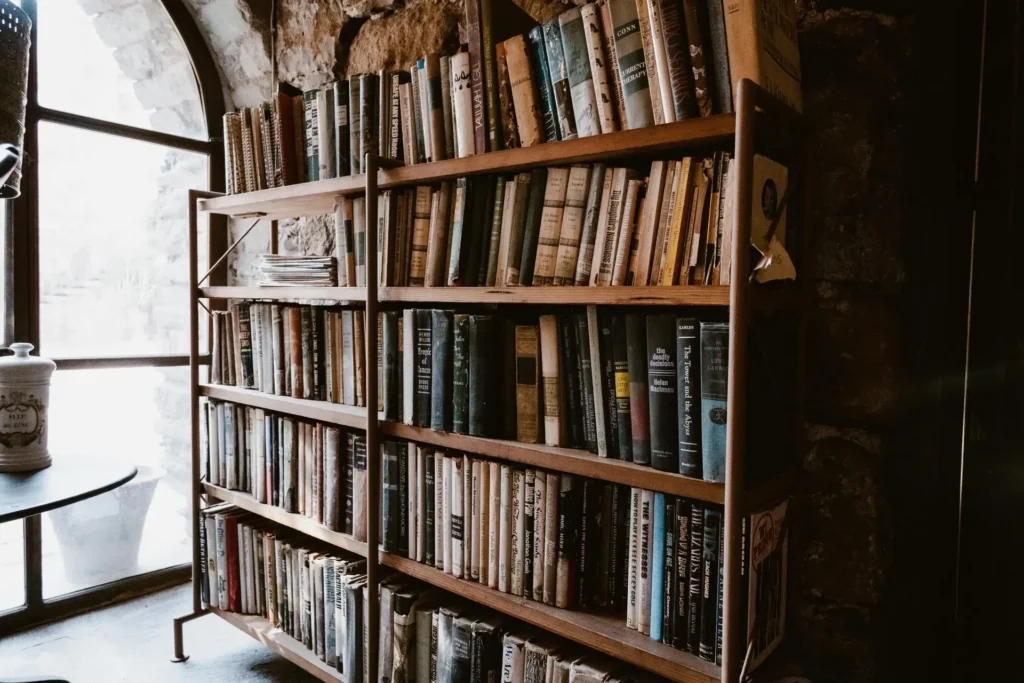
Keep books cool and keep the humidity steady, somewhere between 30 and 60 percent. The Northeast Document Conservation Center (NEDCC), which advises libraries and archives, recommends 30 to 60 percent relative humidity for paper and books. For storage you visit regularly, it suggests 55 to 65°F, and for storage you rarely visit, it suggests cooler still. To keep book-eating insects away, the Library of Congress suggests 35 to 50 percent.
Swings matter as much as the numbers. Paper takes in moisture when the air is damp and releases it when the air is dry, and NEDCC notes that rapid swings distort paper and bindings. High humidity brings mold and pests. Very dry air makes paper and bindings brittle. The EPA recommends keeping indoor humidity below 60 percent, ideally 30 to 50 percent, to prevent mold.
New York makes this hard. Summers are humid, and apartment air gets very dry once the radiators come on during the city’s heat season, October 1 to May 31. Books on a shelf near a radiator or a drafty window go through both extremes every year. Books aren’t the only thing that reacts this way. See our list of items that need climate-controlled storage.
Plastic Bins, Cardboard Boxes or Acid-Free Boxes?
Each one has a place. Here’s how they compare:
| Plastic bins | Cardboard boxes | Acid-free boxes | |
|---|---|---|---|
| Protects from water | Yes | No | No |
| Protects from pests | Yes, with a tight lid | Poorly | Moderately |
| Breathes | No, traps moisture | Yes | Yes |
| Safe for paper over years | Yes, if the books are dry and the space is steady | No, regular cardboard is acidic | Yes, made for it |
| Best for | Everyday books in a climate-controlled unit, and short-term moves | Short-term moves only | Valuable, rare or sentimental books |
Can you store books in plastic containers? Yes, with care. Plastic keeps water and pests out, but a plastic container in a humid space increases mold risk. Make sure every book is completely dry, add silica gel, don’t seal the bin on a humid day, and keep it somewhere the humidity is steady. Polyethylene and polypropylene bins (usually marked with recycling codes 2, 4 or 5) are the usual choice.
Is cardboard safe? For a move or a few months, yes. For years, regular moving boxes aren’t a good choice. They soak up moisture, attract insects and contain acids that can yellow paper over time.
Can You Store Books in a Garage, Attic or Basement?
Not books you care about. The Library of Congress advises against storing anything of value in a basement, attic or garage. These spaces have poor temperature and humidity control and a higher risk of leaks and floods. Putting books in plastic bins doesn’t fix the problem. Bins add some protection from water, but they don’t protect against heat, cold or humidity, and they can make mold more likely in a damp space.
If a garage, attic or basement is your only option, for paperbacks or books you could replace, lower the risk:
- Raise everything off the floor. Use shelves or pallets, never bare concrete, which draws moisture up and is the first thing to get wet in a flood.
- Stay off exterior walls. NEDCC notes that materials stored against exterior walls are affected by the temperature outside. Pick an inside wall, away from the garage door and water heater.
- Avoid the roof line in an attic. That’s where heat builds up in summer.
- Use dry books, sealed bins and silica gel. Only pack books that are completely dry, and replace the silica gel every few months.
- Check them often. Open a box every month or two and look for a musty smell, spots or curling pages.
Most New York apartments don’t have a garage, and a shared basement storage room in an older building is often the dampest space in it. If your books are headed for the basement because there’s no room upstairs, a small climate-controlled unit is a safer option.
How Do You Store Valuable or Rare Books?
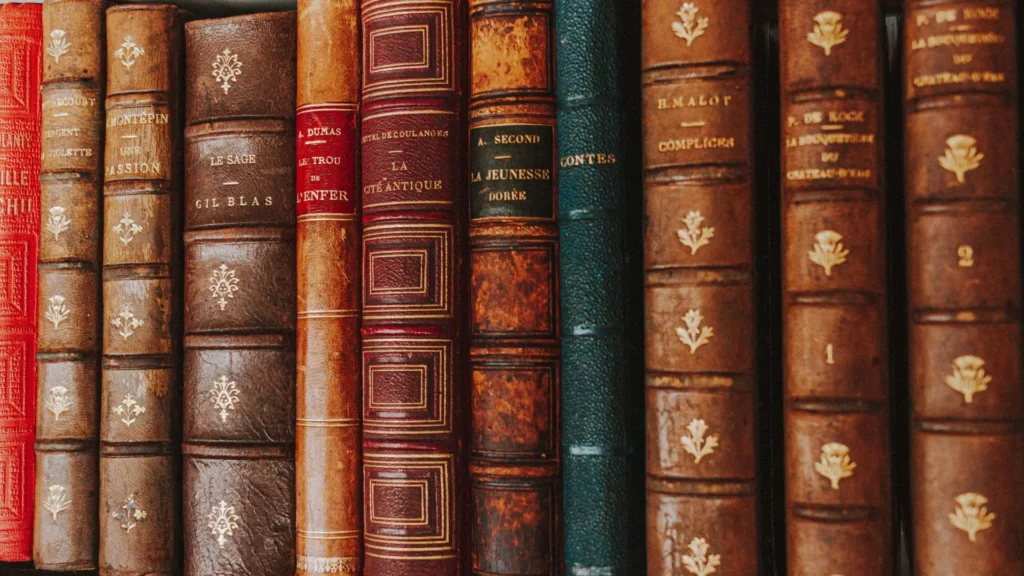
Treat them differently from the rest of the shelf:
- Box them individually. An acid-free box, or a custom box from a conservator, protects a rare book from light, dust and crushing.
- Wrap in acid-free tissue, never newspaper or plastic directly against the binding.
- Don’t stack them. Store rare books flat on their own or upright with support, with nothing heavy on top.
- Don’t oil or “dress” leather bindings. The Library of Congress advises against it. If the leather is crumbling, box the book or ask a conservator.
- Never use tape. The Library of Congress says not to use self-stick tape for repairs, even tape labeled “archival.”
- Handle with clean, dry hands. Lift a book from the middle of the spine, not by pulling on the top edge.
- Choose climate control. For first editions, signed copies and anything you couldn’t replace, steady conditions matter most. The same goes for the photos and papers often stored with them. See our guide to document storage and security.
FAQs: Long-Term Book Storage with Moishe’s Self Storage
What is the best thing to store books long term?
Acid-free boxes are the best choice for valuable books, and plastic containers with tight-fitting lids work well for everyday books, as long as the books are completely dry and stored somewhere with steady humidity. For added protection, use a climate-controlled storage unit.
Is it better to store books upright or flat?
Both methods are fine, but stacking books flat prevents the spines from bending. If storing upright, ensure books are tightly packed to prevent leaning. In a box, pack upright books spine down, never with the spine up.
How do you preserve books for a long time?
Store books in a climate-controlled environment with stable temperature and humidity levels, ideally between 30 and 60 percent relative humidity. Use acid-free paper for wrapping and acid-free boxes or clean plastic containers for storage, and keep them off the floor and out of direct light.
Is it better to store books in plastic bins or cardboard boxes?
Plastic bins are better for long-term storage as they protect books from moisture and pests. Cardboard boxes are less durable, can attract insects, and contain acids that yellow paper over time. Plastic does trap moisture, so only use it for dry books, add silica gel, and avoid humid spaces.
How to store books in a storage unit?
Choose a climate-controlled unit, use acid-free boxes or plastic bins, and elevate containers off the floor on pallets or metal shelving. Put the heaviest boxes at the bottom, leave an aisle, and avoid exposure to direct sunlight and extreme temperatures.
Can I store books in a garage or attic?
It’s not recommended to store books in garages or attics due to temperature fluctuations and humidity, which can cause mold and paper degradation. The Library of Congress advises against storing anything of value in a garage, attic or basement. If you have to, use sealed bins with silica gel, keep them off the floor and away from exterior walls, and check them often.
Do books need climate control?
Yes, especially if you’re storing them long-term. Books can be damaged by humidity and extreme temperatures, so a climate-controlled unit is ideal.
What humidity is best for storing books?
Between 30 and 60 percent relative humidity, kept as steady as possible. NEDCC recommends 30 to 60 percent for paper and books, and the Library of Congress suggests 35 to 50 percent to keep insects away. Above 60 percent, mold becomes a risk.
Can you store books in plastic containers?
Yes, if the books are completely dry and the container stays somewhere with steady humidity. Plastic keeps out water and pests, but the Library of Congress warns that plastic containers in humid spaces raise the risk of mold. Add silica gel packs and check the bins every few months.
Conclusion: Store Your Books Safely with Moishe’s Self Storage

Storing books properly is essential for preserving their condition, especially for valuable or sentimental collections. At Moishe’s Self Storage, we offer climate-controlled units and top-quality storage solutions to protect your books from damage. Whether you’re downsizing, moving, or simply need more space, we have the perfect storage option for you.
Visit Moishe’s Self Storage today to find the ideal storage unit for your book collection!
Sources: Library of Congress. “Frequently Asked Questions: Books.” https://www.loc.gov/preservation/about/faqs/books.html, Northeast Document Conservation Center. “2.1 Temperature, Relative Humidity, Light, and Air Quality: Basic Guidelines for Preservation.” https://www.nedcc.org/free-resources/preservation-leaflets/2.-the-environment/2.1-temperature,-relative-humidity,-light,-and-air-quality-basic-guidelines-for-preservation, U.S. Environmental Protection Agency. “A Brief Guide to Mold, Moisture and Your Home.” https://www.epa.gov/mold/brief-guide-mold-moisture-and-your-home, NYC Department of Housing Preservation and Development. “Heat and Hot Water Information.” https://www.nyc.gov/site/hpd/services-and-information/heat-and-hot-water-information.page