
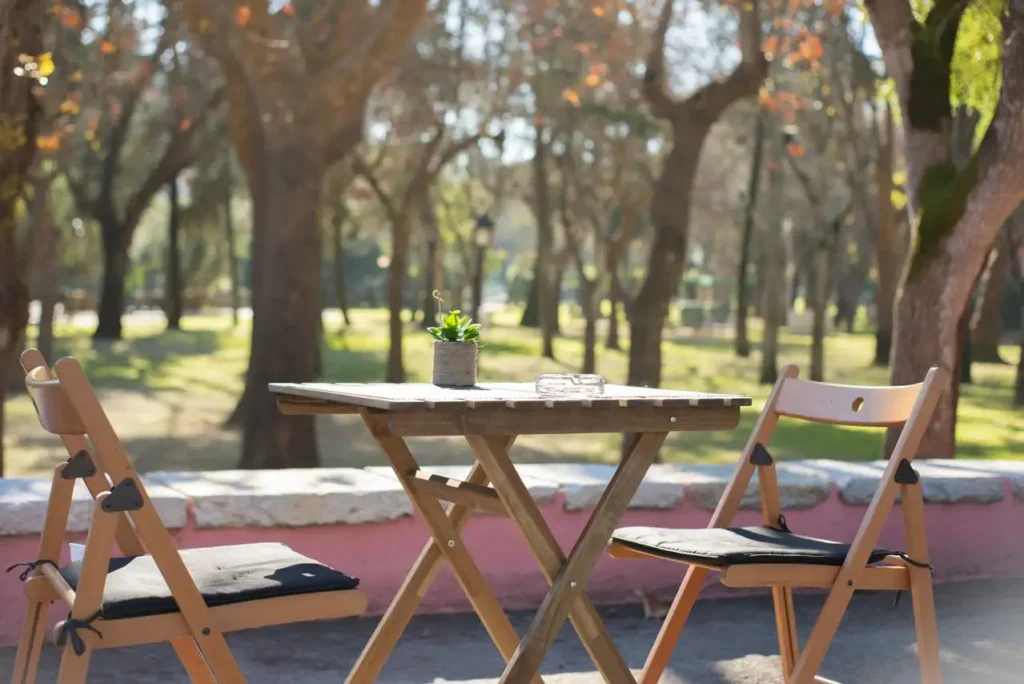
Storing outdoor furniture for a New York winter starts with cleaning and fully drying every piece, taking apart what comes apart, and keeping it somewhere dry and off the ground until spring. Cushions and umbrellas go in breathable bags, separate from the frames, and nothing goes in sealed plastic while it’s still damp.
Quick answer: Bring furniture in by mid-November, wash each piece with mild soap and water, and let it dry for at least a full day. Bag the hardware so screws don’t get lost, and cover frames with breathable covers or moving blankets. Wood, wicker, and cushions do best in climate-controlled storage. Hallways and fire escapes are off limits, no matter the season.
When should you put outdoor furniture away in NYC?
Late October through mid-November is the right window for most of New York City. According to the National Weather Service climate normals for Central Park, January averages 33.7°F, the city gets about 29.8 inches of snow a year, and total precipitation runs about 49.5 inches a year. Winter here hovers around freezing, with plenty of snow and wet weather, so anything left outside goes through months of freeze and thaw.
Water gets into wood grain, wicker weave, and small chips in metal finishes, freezes, expands, and slowly widens those gaps every time the temperature swings. A chair that looked fine in November often shows hairline cracks and rust spots by spring. The earlier you bring things in, the less of that damage you have to undo.
How Do You Prepare Outdoor Furniture for Storage?
Clean and dry every piece
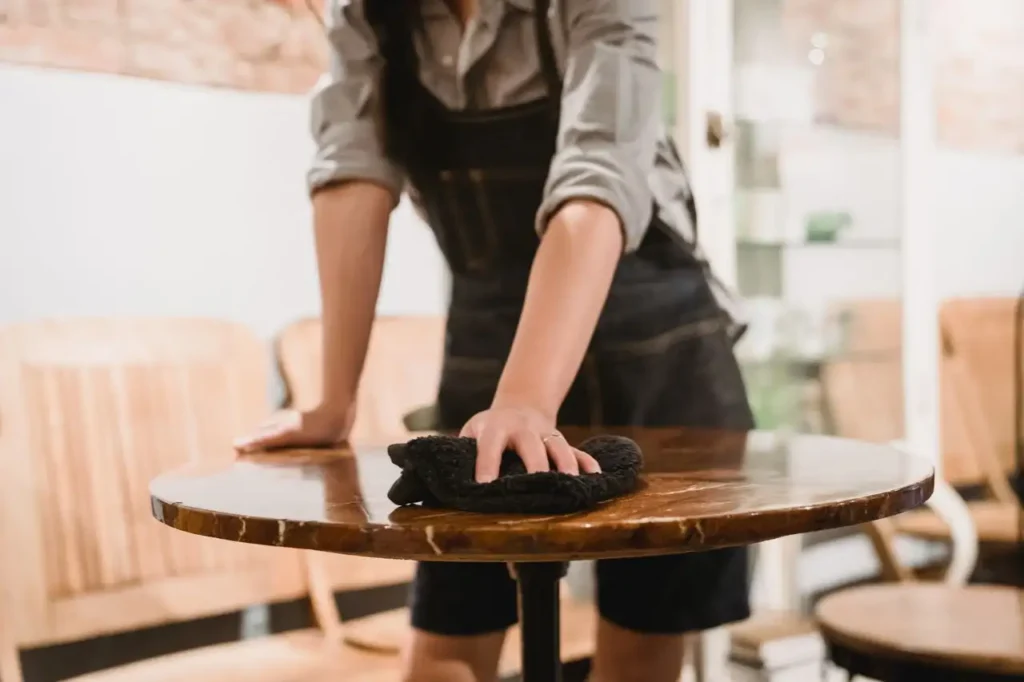
Wash each piece with mild soap and water, then let it dry completely. The EPA’s mold guide says wet materials dried within 24 to 48 hours usually won’t grow mold, which is why furniture packed straight after rain is the set that comes out spotty in spring. Give everything at least a full day to air out before you pack it, longer for cushions and thick wood.
Take it apart and bag the hardware
If the table separates from the base, or the chairs stack, take them apart. Tables and chair stacks slide into tighter spaces and stay cleaner that way. Put screws and bolts in a labeled zip bag and tape the bag to the piece they came from. Loose hardware in a box at the back of a closet rarely finds its way back.
How to store outdoor cushions
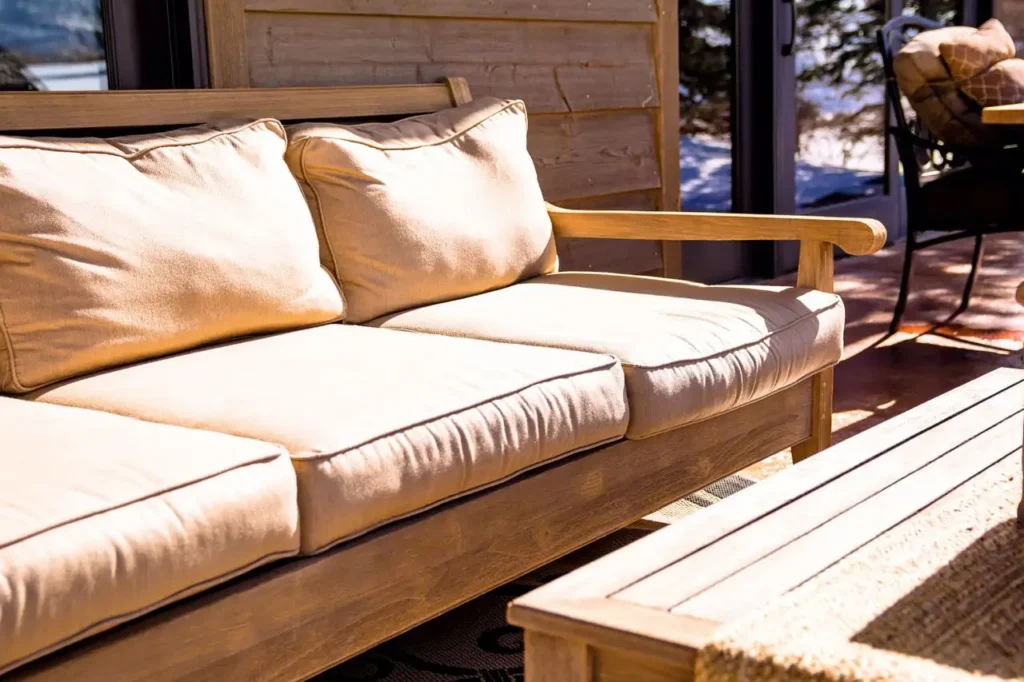
Cushions are the first thing to go moldy and the first thing pests move into. Take them off the frames, brush off dirt, spot-clean stains, and let them dry fully, ideally standing on their edges so air reaches both sides. Store them in breathable fabric bags on top of the stack, where nothing crushes the foam.
Wrap frames in something that breathes
Use breathable covers, old cotton sheets, or moving blankets, and skip plastic wrap and tarps. They trap moisture, and moisture is what causes the damage you’re trying to prevent in the first place. A fitted cotton sheet or a moving blanket protects the finish without holding water against it.
How to Store Outdoor Furniture by Material
Wood and teak
Wood needs a soft brush, mild soap, and water. Dry it completely, check joints for looseness, and store it off the floor on a pallet or shelf. Don’t wrap it in plastic. A winter of snow sitting on the slats grays and cracks the finish faster than dry storage would. Our guide on how to store wooden furniture covers the long-term details.
Metal: wrought iron, steel and aluminum
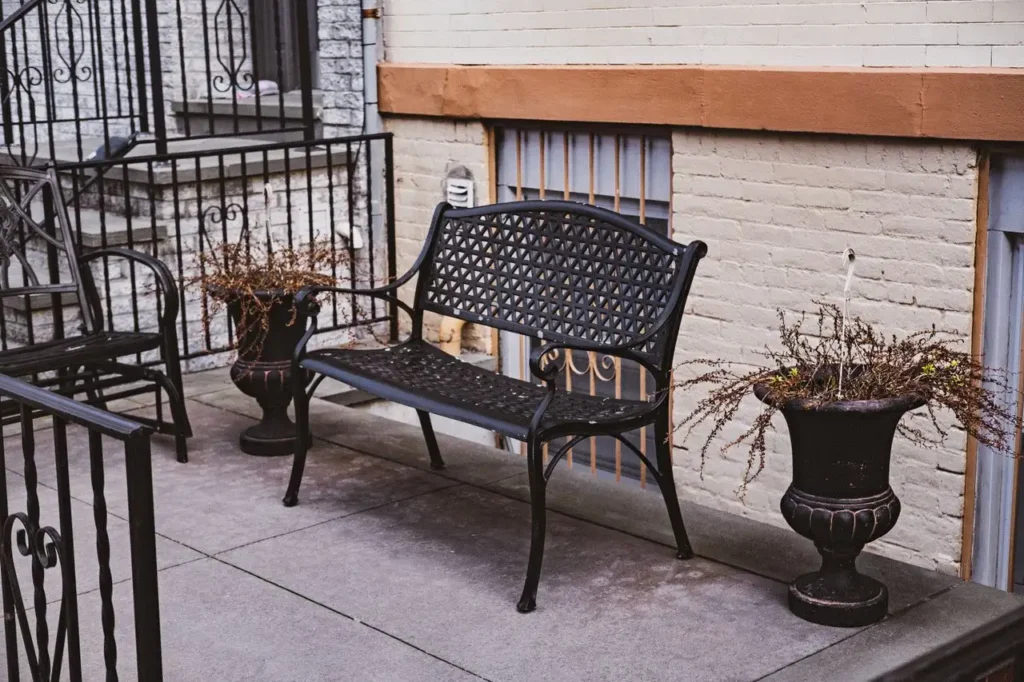
Wrought iron and steel rust wherever the finish is chipped, so sand those spots and touch them up with matching paint before storing. Aluminum doesn’t rust, but it scratches and dents easily, so pad it well. For all metal, tighten any loose bolts now, while the frame is clean and dry.
Wicker and rattan

Natural wicker and rattan crack if they dry out too much and mildew if they stay damp. Vacuum the weave, wipe it with a damp cloth, then let it dry fully. All-weather resin wicker is tougher, but the frame underneath is usually metal, and that frame still needs to be dry before it goes into storage.
Plastic and resin
Wash, dry, and stack. Cold can make some plastics brittle enough to crack under weight, so don’t pile heavy items on top of stacked chairs. A shed in Bay Ridge or a corner of a basement is fine for most plastic sets, but keep them off bare concrete, which holds moisture.
Umbrellas, hammocks and string lights
Close umbrellas fully with the strap fastened and store them in a cover. Wash and dry hammocks before folding. Wind string lights around a piece of cardboard so the wires don’t tangle or kink, and keep the bulbs from getting stepped on when you move the box.
Where should you store outdoor furniture in a NYC apartment?
Somewhere dry, off the ground, and away from exits. The FDNY’s apartment building emergency guide tells residents to keep doorways and windows leading to fire escapes free of obstructions, and to report anything blocking hallways, stairwells, or fire escapes. That applies year round, not just in winter. Building basements are another common spot, but NYC Health advises storing items away from walls and off the ground, and clearing clutter in basements and yards so rats have nowhere to shelter. If you’re using a building basement, keep furniture, especially cushions, raised and away from the walls.
Covering furniture in place works for plastic and aluminum if the covers are vented and the pieces are raised off the deck or balcony floor. Wood, wicker, and cushions do better in a storage unit with steady temperature and humidity. A balcony in Astoria or a rooftop terrace in Long Island City can stay windy and wet all winter, which is the worst combination for anything natural.
Does outdoor furniture need climate-controlled storage?

Climate-controlled storage means a unit that’s heated and cooled to stay within a set range year-round. Natural wood, wicker and rattan, and cushions are sensitive to swings in temperature and humidity, so if your set includes any of them, climate-controlled storage is the safer choice. Plastic, resin, and aluminum are more forgiving and do fine in a standard unit.
If you’re putting away other gear at the same time, see 10 summer items to put in storage before winter and our post on storing outdoor equipment in New York.
How big a storage unit do you need for patio furniture?
A bistro set, meaning a small table and two chairs, plus a few cushion bags often fits in a 5×5. A full dining set with an umbrella, a loveseat, or a pair of loungers is likely closer to a 5×10. These are rough guides, and taking things apart makes a big difference. When you pack, put the frames on the bottom and against the back wall, stand tabletops on edge, and stack cushions on top. Leave a small gap between the stack and the walls so air can move. For a fuller breakdown, see our storage size guide.
Why store your outdoor furniture with Moishe’s?
You need a dry, steady space, a secure spot to leave the set, and a way to move bulky furniture down narrow stairs without a car of your own. Here’s how Moishe’s covers each one.
- Steady conditions: Climate-controlled units keep temperature and humidity in a set range, which is what wood, wicker, and cushions need to come out of winter looking the same as they went in.
- Security: CCTV and guard patrols watch over the facilities while your set sits there all winter.
- Getting it there: Free pickup anywhere in the five boroughs when you rent a unit up to 5×10 for three months or more, and trucks built for narrow NYC streets, so getting a dining set out of a walk-up in Park Slope is not a problem. If you’re moving at the same time, Moishe’s sister company handles moving and storage together.
- The right size: More than 20 unit sizes plus custom spaces, so you’re not paying for a 10×10 to store a bistro set.
- A track record: Family-owned, storing New Yorkers’ things for more than 30 years, with an average customer stay of four years or longer.
Moishe’s has two facilities, plus free pickup across all five boroughs. The Bronx location is at 840 E 134th St, Bronx, NY 10454. The Queens location is at 833 40th Ave, Long Island City, NY 11101.
Check current specials, then reserve your unit or call (800) 536-6564.
Frequently Asked Questions
How do you store outdoor furniture for the winter?
Clean every piece with mild soap and water, let it dry completely, take it apart where you can, bag the hardware, and wrap frames in breathable covers or moving blankets. Cushions and umbrellas go in breathable bags on top of the stack. Wood, wicker, and cushions do best in a climate-controlled unit.
When should I bring outdoor furniture inside in New York?
Late October through mid-November is the right window for most of the city. January averages about 33.7°F, and the city sees roughly 29.8 inches of snow a year, so the sooner you get furniture under cover, the less freeze-thaw damage it takes.
Can I leave patio furniture outside in a New York winter?
Plastic and aluminum furniture can usually stay out under vented covers, raised off the ground. Wood, wicker, and cushions should come inside, since snow, ice, and repeated thawing crack wood finishes and mildew cushions over the winter.
Should I wrap outdoor furniture in plastic for storage?
No. Plastic wrap and tarps trap moisture, which leads to mold, mildew, and rust. Use breathable covers, old cotton sheets, or moving blankets instead.
How should I store outdoor cushions?
Brush off dirt, spot-clean stains, and let them dry fully standing on their edges. Store them in breathable fabric bags or bins with cracked lids, and put them on top of the stack so nothing crushes the foam.
Can I keep patio furniture in my building’s hallway or on the fire escape?
No. The FDNY tells residents to keep doorways and windows leading to fire escapes clear, and to report anything blocking hallways, stairwells, or fire escapes. A dry basement storage room or a storage unit are the safer options.
Ready for Spring Before Winter Starts
Use this checklist before you close the storage room door:
- Bring furniture in by mid-November
- Wash and fully dry every frame
- Tighten loose bolts, and sand and touch up any rust spots
- Bag and label all hardware
- Brush, spot-clean, and dry cushions
- Wrap frames in breathable covers or moving blankets, never plastic
- Pack frames on the bottom, tabletops on edge, cushions on top, with a small gap from the walls
- Keep everything out of hallways and off the fire escape
When the first warm weekend of spring rolls around, the right setup means you pull everything out, give it a quick wipe, and put it back on the rooftop. If you want a unit that holds steady through the cold months, see climate-controlled storage units at Moishe’s.