

To store suitcases in a small apartment, empty them, clean and dry them, nest the smaller ones inside the bigger ones, and keep them standing upright somewhere dry and away from your bedroom. Nesting turns three or four bags into the footprint of one, and drying them first is what keeps the inside from smelling musty the next time you open them.
Quick answer: Unpack right away and check the bag for bed bugs. Vacuum the inside, wipe the outside, and let it air out with the zippers open for a day. Nest the smaller bags inside the largest, fill any leftover space with things you only use when you travel, and add a silica gel packet. Stand the set upright in a hall closet, on a high shelf, or in a storage unit, not under your bed. If your apartment has no room left at all, a small storage unit holds a full set of luggage plus the rest of your seasonal gear.
Why Does Storing Luggage Take So Much Room?
Because a suitcase is mostly air. A large checked bag can take up as much space as a nightstand, and it holds its shape whether it’s full or empty, especially a hard-shell case. Most New Yorkers own three or four bags between carry-ons, checked bags, duffels and backpacks, and they get used a few times a year at most.
In a studio or a one-bedroom with one small closet, that’s a real cost. The space your luggage takes up the other 50 weeks of the year could hold winter coats, a vacuum or a rolling rack.
How Do You Get a Suitcase Ready for Storage?
Prepare it the day you get home, before it goes back in the closet. A bag that gets put away dirty or damp is the one that comes out smelling like mildew, or worse, carrying something home from a hotel.
Unpack right away and check for bed bugs
Don’t leave a suitcase sitting packed on the bedroom floor for a week. The NYC Health Department points out that people often carry bed bugs home without knowing it, in infested luggage, furniture, bedding or clothing. The EPA’s bed bug travel tips say to unpack straight into the washing machine and to inspect your luggage carefully when you get back.
Look along the seams, the zipper tracks, the corners and under the lining edges for small brown bugs, pale shed skins or tiny dark spots. Washing alone usually won’t kill bed bugs. The EPA says time in a dryer on high heat does, so run your travel clothes through a hot dryer after washing.
Vacuum and clean it inside and out
Empty every pocket, then vacuum the inside of the bag, paying attention to seams and corners. Wipe a hard-shell case with a damp cloth and mild soap. For a fabric bag, spot clean stains and brush off dirt. Wipe down the wheels and the bottom too, since they’ve been on airport floors, subway platforms and sidewalks.
Let it dry completely
Leave the bag open, zippers undone, for at least a day before you put it away. Any moisture trapped inside from a damp swimsuit, a wet umbrella or a humid trip can grow mold. The EPA says wet materials should be dried within 24 to 48 hours to prevent mold growth, and that applies to a suitcase lining as much as anything else.
Freshen it before you close it
Drop in a silica gel packet or two to soak up moisture, and a dryer sheet or a small cloth bag of baking soda if the bag tends to hold odors. When you store it, leave the main zipper open an inch or two so a little air can move through.
How Do You Store Suitcases to Save Space?
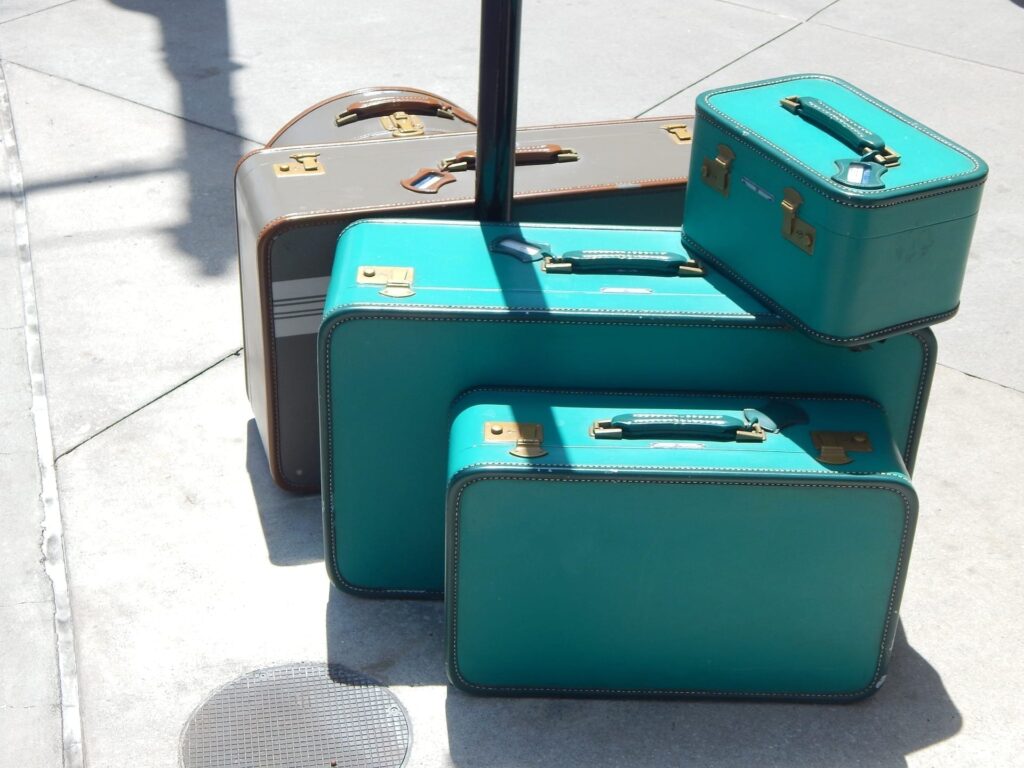
Nest them. Put the carry-on inside the medium bag, and the medium bag inside the largest one, like a set of stacking dolls. One footprint now holds the whole set.
A few other ways to make luggage earn its space:
- Store travel things inside it. Packing cubes, toiletry bags, neck pillows, plug adapters and luggage locks can live inside the suitcase, so everything is in one place when you pack.
- Use it for off-season clothes. A large suitcase makes a decent closed bin for sweaters in summer or swimsuits in winter. Just unload it before your next trip, and keep the clothes clean and dry first.
- Fold soft bags flat. Duffels and soft weekender bags can fold or roll and go inside a hard case or flat on a shelf.
- Stand them upright. Upright bags take less floor space and are easier to pull out than ones lying flat. Don’t stack heavy things on top of soft bags, which crushes them out of shape.
Where Should You Store Suitcases in a Small Apartment?
Somewhere dry, out of direct sun, and ideally outside the bedroom. Good spots in a typical NYC apartment:
- The top shelf of a coat or hall closet. Nested luggage fits up high where nothing else is easy to reach anyway.
- On top of a wardrobe or tall dresser. Hard cases look tidy there, and this keeps them off the floor.
- Behind a door or in a corner of the entryway, standing upright with a cover over them.
- Inside a bench or storage ottoman for small duffels and carry-ons.
Our guide to organizing a very small closet has more ideas for fitting luggage in alongside everything else.
Is it OK to store suitcases under the bed?
It’s the most common suggestion, but the EPA advises against it. Its bed bug guidance for travelers says to store suitcases away from your bedroom and never under your bed, because a bag that picked up bed bugs on a trip puts them right next to where you sleep. If under the bed is truly your only option, inspect and clean the bag thoroughly every time you come home, and keep it zipped inside a sealed cover.
What spots should you avoid?
Avoid damp basements, a spot right next to a radiator, and anywhere in direct sunlight. Heat and sun break down fabric and can warp or yellow plastic shells, and damp air leads to mildew. In older buildings, also be careful with the floor of a closet that shares a wall with a bathroom, where moisture tends to collect.
Do Hard-Shell and Soft Suitcases Need Different Storage?

A little. Both need to be clean and dry, but they fail in different ways.
| Hard-shell suitcases | Soft-sided suitcases | |
|---|---|---|
| Main risk | Scratches, cracked shells, heat warping | Mildew, crushing, dust in the fabric |
| Cleaning | Wipe with a damp cloth and mild soap | Vacuum, brush, spot clean |
| How to store | Upright, nested, nothing heavy leaning on the shell | Upright or folded flat, nothing stacked on top |
| Cover | Breathable cover or the dust bag it came with | Breathable cotton cover, never sealed plastic |
For either kind, a breathable cover is better than a plastic bag. Plastic can trap moisture against the bag, which is exactly what you’re trying to avoid.
How Do You Store Luggage Long Term?
For months or years, the same steps apply, but conditions matter more. Clean, dry and nest the bags, add fresh silica gel, cover them with a breathable cloth, and keep them off the floor in a space that doesn’t get very hot, very cold or damp.
That last part is hard in New York. Summers are humid, and the radiators run from October 1 to May 31 during the city’s heat season, so a closet near a riser or a damp basement goes through big swings every year. Leather trim, zipper tape and the glue in wheel housings and handles all hold up better in steady conditions. For leather or vintage luggage, or bags you’ll leave for a long stretch, climate-controlled storage is the safer choice.
Check on stored luggage every few months if you can. Open it, look for any smell or spots, and replace the silica gel.
Is luggage storage the same as a bag drop?
No. If you search for luggage storage in NYC, most results are apps and shops that hold a tourist’s bags for a few hours or a day, usually before a hotel check-in or after check-out. That’s useful when you’re visiting. Self storage is for the luggage you own and keep between trips, along with everything else that doesn’t fit in your apartment, stored for months or years in a unit you rent.
What Other Travel Gear Can You Store With Your Luggage?
Luggage rarely lives alone. If you’re clearing space for suitcases, it makes sense to store the rest of your travel and seasonal gear the same way:
- Camping and hiking gear. Tents, sleeping bags and packs need the same clean-and-dry treatment. See our guide on how to store camping gear.
- Bikes. A bike takes up as much room as a suitcase set, often more. Read about bike storage in New York.
- Beach and summer gear. Coolers, umbrellas and beach chairs fit alongside luggage in a small unit.
- Ski bags and boot bags. Bulky and used a few weeks a year, so they’re good candidates for storage too.
Store fuel canisters and spare batteries separately. Storage facilities generally prohibit flammable items like fuel, so ask the facility before bringing anything like that in.
How Much Storage Space Do Suitcases Need?
Less than you’d think once they’re nested. A full set of three nested suitcases takes about the floor space of one large checked bag, so a small closet-sized unit holds your luggage with plenty of room to spare for seasonal clothes, a bike or holiday decorations.
If you’re storing luggage as part of a bigger move or a semester away, size up for everything together. College students heading home for the summer can find more in our summer storage guide for students. Shelving helps a lot in a small unit, and our guide on how to organize a storage unit shows how to keep the things you use most near the door.
Why Store Your Luggage with Moishe’s?
When your apartment runs out of room, luggage is one of the easiest things to move out, since you only need it a few times a year. Here’s what Moishe’s offers:
- Free pickup: Free pickup anywhere in the five boroughs when you rent a unit up to 5×10 for three months or more (can’t be combined with other offers), on trucks built for narrow NYC streets. No hauling suitcases on the subway.
- Steady conditions: Climate-controlled units in weather-resistant facilities, so leather trim, zippers and fabric aren’t sitting through humid summers and radiator-dry winters.
- Security: CCTV and guard patrols watch over the facilities.
- The right size: More than 20 unit sizes plus custom spaces, from a few bags and boxes to a full apartment.
- A track record: Family-owned for more than 30 years, with customers staying four years or longer on average.
Moving at the same time? Moishe’s sister company handles moving and storage together. Moishe’s facilities are in The Bronx at 840 E 134th St and in Queens at 833 40th Ave in Long Island City. Check current specials, then reserve your unit or call (800) 536-6564.
Frequently Asked Questions
How do you store suitcases in a small apartment?
Clean and dry them, then nest the smaller bags inside the largest one so the set takes up the space of a single suitcase. Stand them upright on a high closet shelf, on top of a wardrobe, or in a storage unit, and keep them away from your bedroom.
Where should you store suitcases?
Somewhere dry, out of direct sunlight and away from radiators, such as a hall closet shelf or the top of a wardrobe. The EPA recommends storing suitcases away from the bedroom and never under the bed, to avoid spreading bed bugs.
Should you store suitcases under the bed?
The EPA advises against it. A suitcase that picked up bed bugs while traveling can bring them right next to where you sleep, so the EPA recommends keeping luggage out of the bedroom. If you have no other option, inspect and clean the bag every time you come home and keep it in a zipped cover.
How do you keep stored luggage from smelling musty?
Make sure the bag is completely dry before you store it, add a silica gel packet, and leave the zipper open an inch or two so air can move. Avoid plastic bags and damp basements, and check the bag every few months.
Should you store things inside your suitcase?
Yes. Nest smaller bags inside bigger ones and store travel items like packing cubes, toiletry bags and adapters inside. Clean, dry off-season clothes work too, as long as you unpack them before your next trip.
How do you store luggage long term?
Clean, dry and nest the bags, add fresh silica gel, cover them with breathable cloth instead of plastic, and keep them off the floor somewhere the temperature and humidity stay steady. For leather or vintage luggage, climate-controlled storage is the safer choice.
Luggage Storage Checklist
- Unpack the day you get home and wash and hot-dry your travel clothes
- Inspect seams, zippers and corners for bed bugs
- Vacuum the inside and wipe the shell, wheels and handles
- Leave the bag open to dry for at least a day
- Add a silica gel packet
- Nest smaller bags inside the largest one
- Fill leftover space with travel accessories
- Cover with breathable cloth, not plastic
- Store upright, off the floor, away from heat, sun and your bedroom
- Check long-term luggage every few months
Do that, and your suitcases come out of storage clean, dry and ready to pack. If your apartment has no room left for them, a small unit at Moishe’s, with free pickup, gets them out of your way until the next trip.
Sources: U.S. Environmental Protection Agency. “Bed Bugs: Tips for Travel.” https://www.epa.gov/bedbugs/tips-travel, U.S. Environmental Protection Agency. “A Brief Guide to Mold, Moisture and Your Home.” https://www.epa.gov/mold/brief-guide-mold-moisture-and-your-home, NYC Department of Health and Mental Hygiene. “Stop Bed Bugs Safely.”, https://www.nyc.gov/assets/doh/downloads/pdf/bedbugs/stop-bedbugs-safely.pdf, NYC Department of Housing Preservation and Development. “Heat and Hot Water Information.”, https://www.nyc.gov/site/hpd/services-and-information/heat-and-hot-water-information.page