
In a New York apartment, floor space runs out fast, but wall and ceiling space almost never does. The average NYC apartment measures just 779 square feet, well under the national average of 1,052 (HireAHelper, based on U.S. Census data), which means most of the storage you’re missing is probably sitting unused above your head. Floor-to-ceiling shelving, wall-mounted racks, pegboards, and a few furniture swaps can add real storage to a studio or one-bedroom without touching the square footage you’re already short on.
Why Vertical Storage Matters More in NYC
Closets in prewar buildings and studio layouts were rarely built with much depth or height in mind, and floor space is the first thing to disappear once a bed, a couch, and a desk are in the room. Walls, and the space above doors, cabinets, and closets, are the one part of a small apartment that’s almost always underused. Building up instead of out doesn’t just add storage, it can make a small room feel taller and less cluttered at eye level, since less stuff ends up sitting on the floor or piled on every flat surface.
Start With Floor-to-Ceiling Shelving

A tall bookshelf or a custom unit that runs from floor to ceiling uses a wall’s full height instead of stopping at the standard 6 feet most furniture tops out at. Keep what you use daily on the middle shelves, within easy reach, and push out-of-season or rarely used items to the top, where a step stool is a small price for the extra square footage. Against one blank wall, this alone can add the equivalent of a small closet.
Add Floating and Wall-Mounted Shelves Where You Actually Work
Floating shelves above a desk, a couch, or a bed put storage exactly where you need it without using any floor space at all. IKEA’s guidance on vertical storage points to corners specifically, since a corner shelf uses space most furniture can’t reach anyway. In a kitchen, a shelf above the counter or stove can hold everything from spices to the small appliances you don’t use every day.
Try a Pegboard for Storage That Moves With You

A pegboard mounted on one wall turns into whatever you need that week: hooks for pots and pans in a kitchen, a spot for craft supplies or tools in a workspace, or even a bedside setup next to a loft bed. It’s one of the few storage solutions that’s genuinely flexible, since moving a hook takes seconds and doesn’t leave a new hole behind.
Go Vertical in the Bathroom and Over the Door
Bathrooms in small NYC apartments are usually the tightest room in the unit, which makes the wall above the toilet and the back of the door two of the most overlooked storage spots in the whole apartment. An over-the-door organizer or a slim shelving unit above the toilet tank can hold towels, toiletries, and cleaning supplies that would otherwise crowd a single under-sink cabinet.
Consider a Loft Bed or Bed Risers
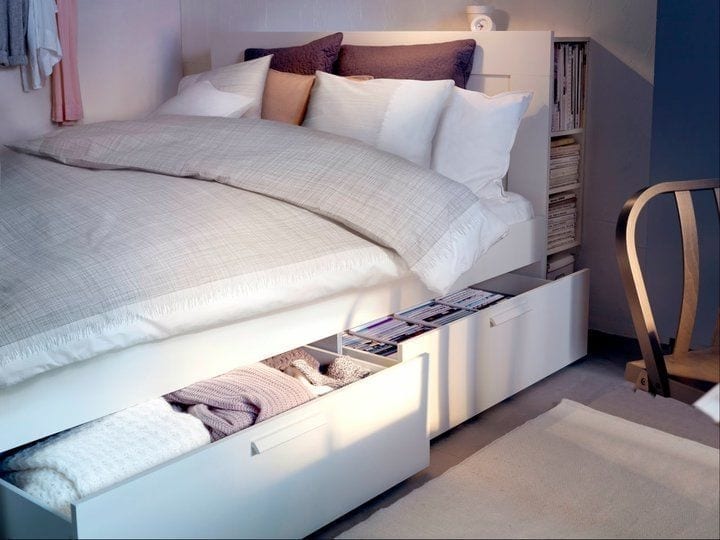
Raising the bed, either with a full loft frame or simple risers, opens up the entire footprint underneath it. A loft bed can free up enough room for a small desk, a seating area, or dedicated storage bins, while risers alone add just enough height to slide flat storage boxes under a standard bed frame.
Know What Your Lease Allows Before You Drill
Most NYC leases allow small nail holes for shelves and art, but heavier floor-to-ceiling units or anything anchored into plaster or brick may need landlord sign-off, and you’re usually responsible for patching holes before you move out. Check your lease or ask your landlord before mounting anything heavier than a picture frame, and use an anchor rated for your actual wall type. Plaster and lath walls, common in older NYC buildings, need different anchors than drywall, and the wrong one can pull straight out under weight.
When Vertical Storage Isn’t Enough
Even a fully maximized wall can only hold so much, especially for anything seasonal, sentimental, or simply too bulky to shelve: holiday decorations, out-of-season clothing, sports equipment, or furniture you’re not ready to part with. That’s where off-site storage picks up once vertical storage runs out. A small unit costs a fraction of what the equivalent closet space would add to NYC rent, and Moishe’s free pickup means getting boxes out doesn’t require a car, or a second trip down four flights of stairs. A 5×5 unit covers most seasonal rotations, or use the room size calculator to figure out what you actually need. For more on making a small layout work day to day, see our guide to living comfortably in a small NYC studio.
Frequently Asked Questions
What is the best way to add storage to a small NYC apartment?
Use vertical space first. Floor-to-ceiling shelving, wall-mounted racks, and the space above doors and cabinets add real storage without using any floor space. For anything that still doesn’t fit, off-site storage covers the rest without needing a bigger apartment.
Can I install shelves in a NYC rental apartment?
Usually, yes, for small to medium shelves with the right wall anchors, but check your lease first. Heavier installations or anything drilled into plaster or brick may need landlord approval, and most leases expect holes patched before move-out.
How much space does the average small NYC apartment actually have?
Not much. The average NYC apartment is 779 square feet, well below the national average of 1,052, and older buildings especially tend to have shallow, narrow closets that don’t reflect the height of the room.
What’s the easiest vertical storage upgrade to start with?
A pegboard or a set of floating shelves. Both mount without much wall damage, cost relatively little, and can be reconfigured as your storage needs change.
Is a loft bed worth it in a studio apartment?
For most studios, yes. Raising the bed opens up the entire footprint underneath for a desk, seating, or storage bins, which matters most in a room where the bed usually dominates the floor plan.