
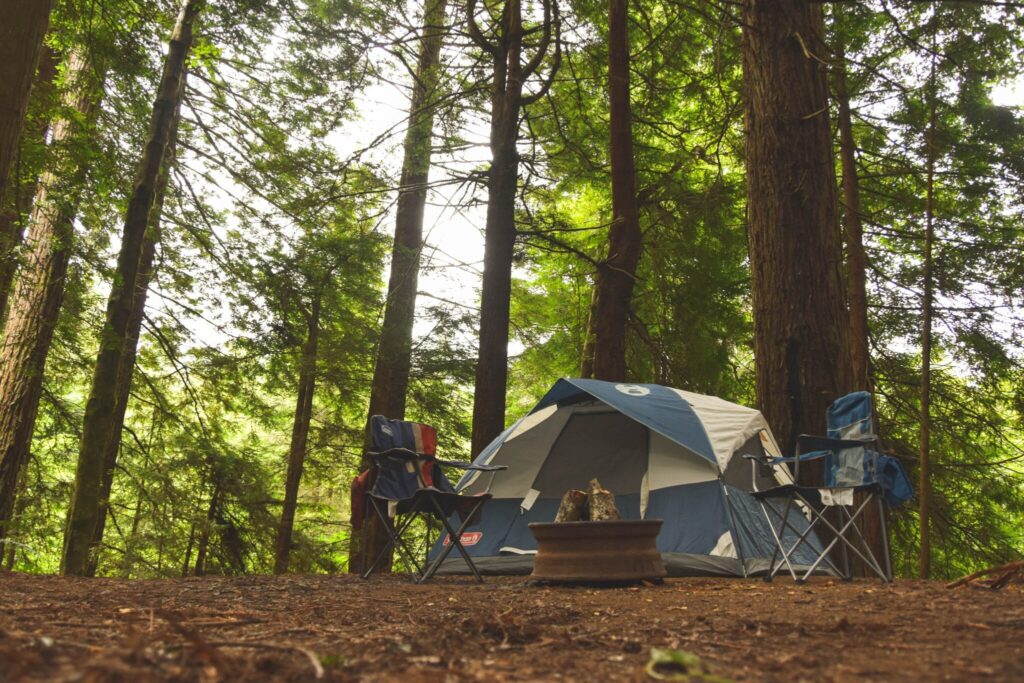
The short way to store camping gear between trips is to clean and fully dry every piece, keep sleeping bags and tents loose instead of packed tight, pull batteries and fuel out, and keep everything cool, dry and off the floor. Most gear that gets ruined between trips isn’t worn out from use. It was put away damp, crushed in a stuff sack for months, or left next to a leaking battery.
Quick answer: Dry the tent fully and store it loose in a breathable bag, not the stuff sack. Store sleeping bags uncompressed in a large cotton or mesh sack. Pull batteries out of headlamps and lanterns. Keep fuel canisters out of storage bins. Use lidded bins for hard gear and breathable bags for soft gear, and keep everything off the floor.
Why Does Camping Gear Get Ruined in Storage?
Four things do most of the damage. Moisture grows mold on tents, pads, and bags. Compression flattens insulation so a sleeping bag keeps you less warm on the next trip. Pests go after food residue and soft nesting material like down jackets, puffy vests, and sleeping bag fill. Leftover batteries and fuel can leak, corrode contacts, or in the worst case start a fire in a closet or bin.
The week you get home from a trip is when you prevent most of this. A tent tossed into a closet in its stuff sack will smell like a wet dog by the next trip. A sleeping bag left in a tight bundle will feel flat and cold, even when the tag still looks new. Batteries left inside a headlamp or lantern will often leak and ruin the unit. None of these problems show up on the trail. They show up weeks later, when you open the bag and find the damage.
How Do You Clean and Dry Camping Gear Before Storing It?
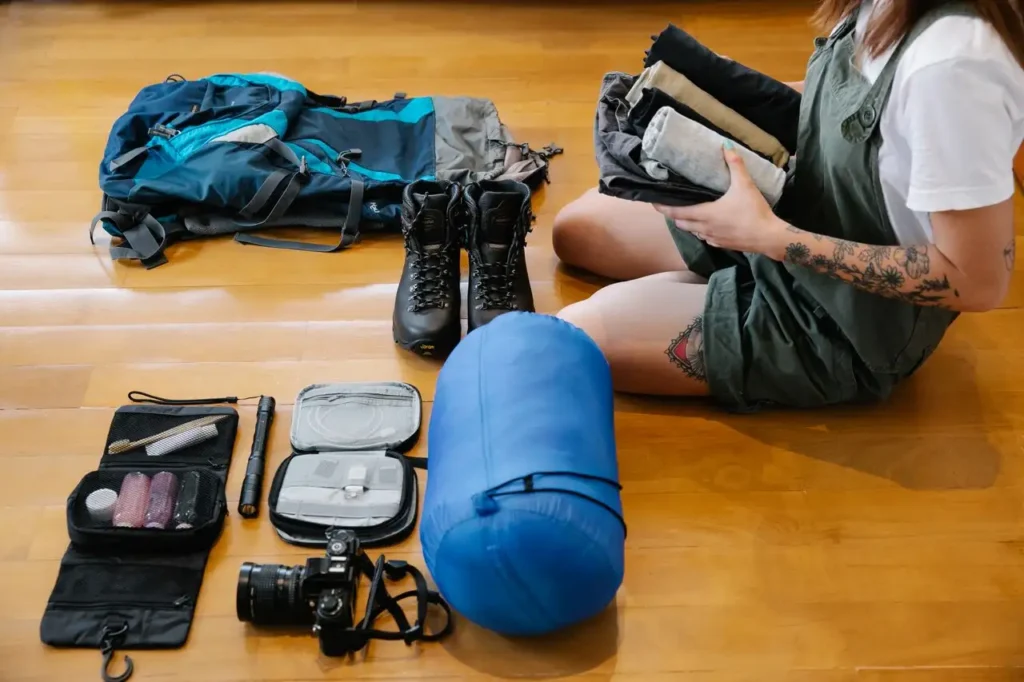
The EPA says wet materials dried within 24 to 48 hours usually won’t grow mold, which means the clock starts when you get home from the trip, not when you get around to unpacking.
Drying a tent in a NYC apartment takes a little creativity. Pitch the tent in the living room for a day if you have the space. If not, drape the fly over a shower rod and the tent body over a couple of chairs. Open every pocket of the backpack and turn it upside down over a trash bag to shake out crumbs and sand. Unzip sleeping bags and hang them over a door or the backs of two chairs. Wipe the floor of the tent with a dry cloth and prop the door open so air moves through it. As a rule of thumb, if it still feels cool to the touch, it’s still damp. Coolers and pots get wiped out and left open overnight.
How to Store Camping Gear, Item by Item
How to store a tent
Shake out dirt and sand, wipe the floor clean, and dry the tent, fly, and footprint completely. A tent packed damp mildews, and the waterproof coating can break down and turn sticky and smelly over time. Store the tent loosely rolled, not folded tight, in a large breathable bag or an old pillowcase, not squeezed into the stuff sack it came in. Poles and stakes go in their own bag beside it, and the stakes should get a wipe-down first so they don’t rust.
How to store a sleeping bag
Store a sleeping bag uncompressed, never in its stuff sack. Months of compression crush the down or synthetic fill so it loses loft and warmth, and the damage doesn’t bounce back after one fluffing on the next trip. Air the bag out, make sure it’s fully dry, then store it loose in a large cotton or mesh storage sack, or hang it in a closet on a wide hanger. A clean pillowcase works for smaller synthetic bags.
Sleeping pads
Store self-inflating pads unrolled or loosely rolled with the valve open so the foam can expand. Air pads need to be dry on the inside before you close them, since moisture from breath can grow mold inside the chambers. Closed-cell foam pads can lie flat under a bed or stand against a wall.
Backpacks and duffels
Empty every pocket, brush out crumbs and dirt, and loosen all the straps so they don’t dig into the fabric over time. Hang packs or stand them upright rather than crushing them under heavier bins. For travel bags and similar gear, see our guide on storing luggage, suitcases and gear.
Camp stoves, cookware and coolers
Wash pots, pans, and utensils, and check the stove for food or grease, which draws mice and bugs. Disconnect and remove the fuel canister before storing the stove. Prop coolers open until dry, then store them with the lid slightly open so they don’t trap odors. A few sheets of newspaper left inside for the first week soak up leftover moisture.
Headlamps, lanterns and batteries
Take the batteries out. Alkaline batteries left inside a device for months can leak and corrode the contacts. For lithium-ion batteries, the EPA recommends taping the terminals or putting each battery in its own bag to prevent fires, and the same habit makes sense for storage. The FDNY advises keeping lithium-ion batteries at room temperature, out of direct sunlight, and away from anything flammable, which means a closet shelf beats a hot windowsill.
Fuel canisters and propane
Keep fuel and propane out of your gear bins. Storage facilities generally prohibit flammable gas and fuel, so ask the facility before bringing anything in. At home, NYC311 says apartments and other residential buildings, including roofs and terraces, are limited to a single 16.4-ounce disposable propane cylinder. A typical camp-stove canister is exactly that size, so an NYC renter should keep one at most at home. NYC’s Department of Sanitation does not collect propane tanks, so don’t put them in the trash. Take them to a SAFE Disposal Event, exchange them, or bring them to a hardware store or propane dealer.
What Containers Are Best for Camping Gear?
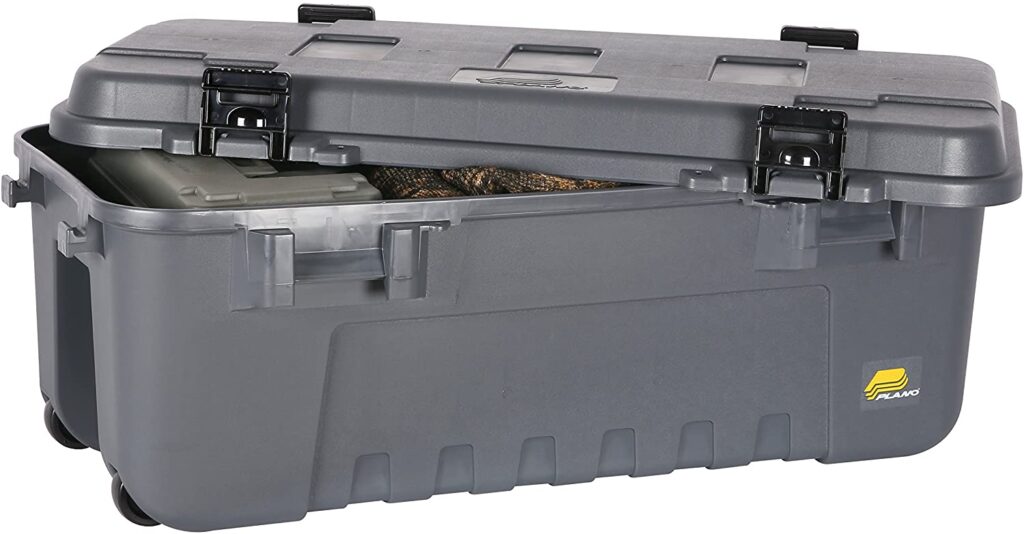
Lidded plastic bins for hard gear, breathable bags for soft gear. Sealed plastic around a tent or sleeping bag traps any leftover moisture and grows mildew, which is the opposite of what you want. Hard gear like stoves, cookware, lanterns, and small parts can go in stackable bins with lids. Soft gear like tents, sleeping bags, and down jackets belongs in cotton, mesh, or old pillowcases that breathe.
A few container tips:
- Toss a few silica gel packets into each hard-gear bin to absorb any moisture.
- Put small parts like stakes, carabiners, paracord, and spare buckles in one zip bag so they don’t disappear into the corners of bins.
- Label bins on the side, not the lid, since lids get swapped around between trips.
- Keep one “grab bin” up front with the things you pack for every trip, like a first-aid kit, headlamp, lighter, bug spray, and a small tool kit.
Where Should You Store Camping Gear in a NYC Apartment?
Cool, dry, and off the floor, which usually means a top closet shelf, under the bed, or a storage unit. Avoid spots next to radiators or steam pipes, since the heat bakes tent coatings and dries out leather boots. Avoid the floor of a damp closet too, since basement closets and ground-floor corners can be a lot damper than the rest of the apartment. For more ways to find room, see our guide to living in a small NYC studio.
Basements and storage cages tend to be damp, and soft gear is what mice nest in. If you find droppings, the CDC says not to sweep or vacuum them. Air the space out for 30 minutes, wear rubber or plastic gloves, and soak the droppings with a bleach solution of 1.5 cups of household bleach per gallon of water, or an EPA-registered disinfectant, before wiping them up.
Does Camping Gear Need Climate-Controlled Storage?
Some gear is sensitive to big swings in heat and humidity. Down sleeping bags, tents with waterproof coatings, air and self-inflating pads, and anything with glued seams all hold up better in steady conditions. Metal cookware, plastic bins, coolers, and trekking poles are more forgiving and can take a wider range. Climate-controlled storage is a space that’s heated and cooled to stay within a set range year-round, which is why it suits the sensitive items in your kit.
How Much Storage Space Does Camping Gear Need?
These are rough guides, since every kit is different. A couple’s kit, meaning a tent, two sleeping bags, pads, a stove, and a few bins, often fits on the shelves of a 5×3 or 5×5. A family kit with a large tent, camp chairs, a canopy, and coolers is likely closer to a 5×7 or 5×10. A good layout is shelving along one wall, heavy bins at the bottom, soft gear on top, and the grab bin at the front so it goes out the door first on trip day. For a fuller walkthrough, see our guide on how to organize a storage unit.
Why Store Your Camping Gear with Moishe’s?
Moishe’s gives you steady conditions for expensive soft gear, a secure place to leave a bulky kit, and a way to get the gear there without a car. It’s a good match for New Yorkers who camp a few times a year and don’t have room at home.
- Steady conditions: Climate-controlled units keep temperature and humidity steady, which is what down, tent coatings, and pads need between trips.
- Security: CCTV and guard patrols help protect your gear between trips.
- Getting it there: Free pickup anywhere in the five boroughs when you rent a unit up to 5×10 for three months or more, on trucks built for narrow NYC streets.
- The right size: 20+ unit sizes plus custom spaces, so a couple’s kit and a family kit both have somewhere to go.
- A track record: Family-owned, storing New Yorkers’ things for more than 30 years, with the average customer staying four years or longer. Facilities are built to hold up against NYC weather.
Moishe’s has two facilities: The Bronx at 840 E 134th St, Bronx, NY 10454, and Queens at 833 40th Ave, Long Island City, NY 11101. Check current specials, then reserve your unit or call (800) 536-6564.
Frequently Asked Questions
How do you store camping gear long term?
Clean and dry every piece first, then store soft gear loose in breathable bags and hard gear in lidded bins, all kept cool, dry, and off the floor. Pull batteries from headlamps and lanterns, and keep fuel canisters out of storage bins. For expensive soft gear like tents and sleeping bags, climate-controlled storage is a good fit.
How should you store a sleeping bag?
Loose, never compressed in its stuff sack. Months of compression crush the fill so the bag loses loft and warmth. Store it in a large cotton or mesh storage sack, or hang it in a closet, and make sure it’s fully dry before you put it away.
How do you store a tent so it doesn’t get moldy?
Dry the tent, fly, and footprint completely first, including the inside of the tent, since the EPA says wet materials dried within 24 to 48 hours usually won’t grow mold. Then store the tent loosely rolled in a large breathable bag or pillowcase, not in the stuff sack, and avoid spots near radiators or in damp closets.
Can you store propane or camping fuel in a storage unit?
Storage facilities generally prohibit flammable gas and fuel, so ask the facility before bringing anything in. At home, NYC311 limits apartments and other residential buildings to a single 16.4-ounce disposable propane cylinder, which is the size of a typical camp-stove canister, and the city’s Department of Sanitation does not collect propane tanks.
Should camping gear be stored in plastic bins?
Yes for hard gear like stoves, cookware, and lanterns, since lidded bins keep them organized and protected. No for soft gear like tents, sleeping bags, and down jackets, since sealed plastic traps moisture and can grow mildew. Soft gear wants breathable cotton or mesh bags.
Where can I store camping gear in a small NYC apartment?
Cool, dry, and off the floor, which usually means a top closet shelf or under the bed. Avoid spots next to radiators or steam pipes and damp basement closets. If your apartment is too tight, climate-controlled storage is built for the job
Before the Bins Go on the Shelf
A quick checklist before you put everything away:
- Brush or wipe off dirt and food residue from every piece.
- Dry the tent, sleeping bags, and pads completely.
- Store tents and sleeping bags loose in breathable bags, not in stuff sacks.
- Take batteries out of headlamps and lanterns.
- Remove fuel canisters from stoves and keep them out of storage bins.
- Put hard gear in labeled, lidded bins with a few silica gel packets.
- Keep everything cool, dry, and off the floor.
For tents, sleeping bags, and pads, the steady temperature and humidity of climate-controlled storage units makes a real difference between one trip and the next.