
Climate controlled storage keeps a unit at a steady temperature (usually 55-85°F) and moderate humidity (around 45-55%) year-round, instead of letting it swing with the weather outside. In New York, that’s the difference between a unit that protects what’s inside it and one that just locks the door. Here’s what climate control actually does, how it works, what it’s worth protecting, where to find it in NYC, and what it costs.
What Is Climate Controlled Storage?
A standard storage unit tracks whatever’s happening outside. It gets hot in summer, cold in winter, and humid whenever the city is humid. A climate controlled unit runs HVAC and dehumidification to hold both temperature and humidity in a narrow, stable range no matter the season. That stability is what stops wood from warping, electronics from corroding, and paper and fabric from growing mold.
Not every unit marketed as “climate controlled” manages humidity, some only manage temperature. If you’re storing anything that mold or warping would ruin, ask specifically whether the facility controls humidity, not just heat.
How Does Climate Controlled Storage Actually Work?
A climate controlled unit runs on the same basic systems as your apartment, just tuned for storage instead of comfort. HVAC equipment handles the heating and cooling, a dehumidifier (or the air conditioning system’s own condensation cycle) pulls excess moisture out of the air, and a thermostat keeps everything inside a set range rather than reacting only when something goes wrong.
The building itself does real work too. Climate controlled units are fully enclosed and insulated, with sealed doors and vapor barriers that keep outside air from leaking in the way it would around a garage-style roll-up door. Most facilities monitor temperature and humidity continuously, some with sensors in individual hallways or units, so drift gets corrected automatically instead of waiting for a tenant to notice a problem months later.
Climate Controlled vs. Temperature Controlled vs. Standard Storage
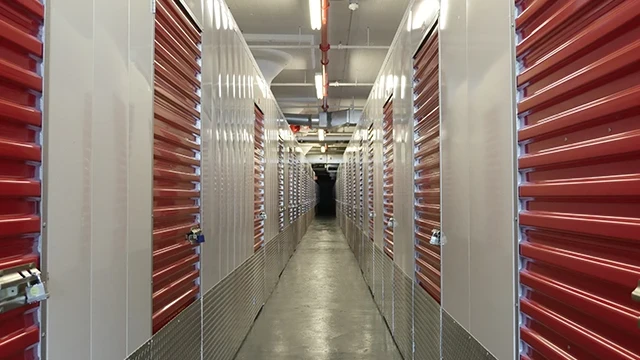
The three terms get used loosely, and mixing them up is an easy way to under-protect something valuable.
| Standard unit | Temperature controlled | Climate controlled | |
|---|---|---|---|
| Temperature | Tracks outdoor extremes | Held in a set range (heating, sometimes cooling) | Held in a set range, typically 55-85°F |
| Humidity | Not managed | Not directly managed | Actively managed, typically 45-55% |
| Location | Often outdoor, drive-up | Usually indoor | Always indoor |
| Best for | Tools, patio furniture, short stays | Items sensitive to heat or cold only | Wood, electronics, art, documents, wine, anything long-term |
A standard unit is just a sealed box. Temperature controlled (sometimes called heated or air conditioned) manages heat but usually not humidity, which is fine for a sealed bin of tools but risky for anything organic. Climate controlled manages both, which is the level anything sensitive actually needs in a city with New York’s humidity swings.
Why NYC Weather Makes This Matter
New York summers run hot and sticky. Relative humidity sits around 62-65% through July and August, with heat regularly pushing past 90°F (Current Results). Once relative humidity crosses about 60%, mold has what it needs to grow on almost any dusty organic surface, and that can happen within days inside a closed, un-conditioned unit (EPA data, via RestoreAdvisor). Winter brings the opposite problem: dry cold air that pulls moisture out of wood and leather. A unit that isn’t climate controlled absorbs both extremes, sometimes worse than the weather outside, since a metal roof in direct sun can push interior temperatures higher than the street.
It adds up. The average New Yorker already stores more per household than most of the country, simply because apartments here run smaller (Moishe’s 2026 storage data), which means whatever’s in that unit is often there for the long haul, long enough for a season or two of NYC weather to do real damage if it isn’t protected.
What Should You Store in a Climate Controlled Unit?

Anything organic, electronic, or finished holds up better with climate control:
- Wood furniture and musical instruments expand and contract with humidity, which warps panels and pulls instruments out of tune.
- Electronics corrode from condensation caused by temperature swings, often in ways that don’t show up until months later.
- Mattresses and upholstered furniture absorb moisture like a sponge. A mattress or sofa stored through a humid summer in a standard unit can develop mold and odor that’s nearly impossible to fully remove.
- Art, antiques, and collectibles need the most stable conditions of anything on this list. Art storage at Moishe’s is built around that.
- Documents, photos, and business records stick together, curl, and mold in humid conditions, which is why document storage needs a controlled environment.
- Wine needs stable temperature and humidity together to age correctly. Moishe’s runs dedicated wine storage for exactly this.
- Leather and clothing dry out and crack in low humidity, or mold in high humidity.
What Can Stay in Standard Storage?
Not everything needs the extra cost. Metal shelving, plastic bins, tools, sporting goods, and patio furniture built for outdoor weather generally hold up fine in a standard unit. Ordinary paperback books and everyday clothing you wouldn’t mind replacing are a judgment call, both survive a short stay but benefit from climate control over a full season. If it’s sturdy, non-organic, and only in storage for a few weeks, save the money and skip it.
Climate Controlled Storage Near You in NYC
Moishe’s runs climate controlled storage from two facilities that together cover all five boroughs:
- One serving the Bronx and Manhattan. See the Bronx location page for the exact address, hours, and directions.
- Long Island City, 833 40th Ave #101, Long Island City, NY 11101, minutes from the 7, E, M, G, N, and W trains and the Pulaski and Kosciuszko bridges into Brooklyn. Serves Queens and Brooklyn.
Both facilities offer climate controlled rooms alongside standard units, so you’re not stuck picking a whole building on one setting. If you’re not sure what size you need, the room size calculator can help before you book.
What Does Moishe’s Climate Controlled Storage Include?
Moishe’s backs its climate controlled units with round-the-clock security: CCTV, guard patrols, and alarmed units. If you’re within the five boroughs and renting three months or more, pickup is free, using trucks built to handle narrow city streets and walk-up buildings a standard moving truck can’t get near. Why Moishe’s covers the rest of what’s included across sizes and locations.
Storage and moving can also bundle together. Moishe’s own moving crews handle everything from a studio move to a full commercial relocation, so climate controlled storage doesn’t have to be a separate errand from the move itself. For businesses, the same climate protection extends to commercial and business storage for inventory, electronics, and records.
How Much Does Climate Controlled Storage Cost?
Climate controlled units typically run 10-30% more than a standard unit of the same size, depending on facility and location. In practical terms, that’s usually an extra $20-$40 a month, which is small next to the cost of replacing a warped dresser, a corroded amplifier, or water-damaged documents. Across New York City specifically, climate controlled units average around $261 a month versus $236 for standard units citywide, though the actual range runs much wider by neighborhood and unit size. Moishe’s runs current move-in specials that can offset a good chunk of that difference, including a free first month on select units.
Does Insurance Cover Storage Unit Damage from Humidity or Mold?
Usually not. Renters insurance may cover items in storage against theft, vandalism, and sudden weather-related damage, but damage from mold, mildew, and flooding typically isn’t covered (Progressive). That gap is a real argument for climate control on its own: if humidity ruins something in a standard unit over a slow NYC summer, your policy likely won’t pay for it. Climate control prevents the damage in the first place rather than leaving you to fight a claim over it.
Questions to Ask Before You Book Climate Controlled Storage
Not every listing that says “climate controlled” means the same thing, so it’s worth asking a few direct questions before you book anywhere, Moishe’s included:
- Does the unit manage humidity, or only temperature?
- What’s the actual temperature and humidity range, and how often is it checked?
- Is the unit fully indoor, or does it share a wall with an unconditioned space like a loading dock?
- What happens if the HVAC system fails, is there a backup, and how would you find out?
A facility that answers these clearly and specifically is one actually built for climate control, not standard storage with a nicer name on it.
Frequently Asked Questions
What is climate controlled storage?
Climate controlled storage is an enclosed unit kept at a stable temperature, usually 55-85°F, with humidity held around 45-55% using HVAC and dehumidification. That stability prevents the warping, mold, corrosion, and cracking that temperature swings and humidity cause.
How does climate controlled storage work?
It runs HVAC equipment and dehumidification through a fully insulated, sealed unit, with temperature and humidity monitored continuously so the system corrects drift automatically instead of only reacting after something’s already damaged.
Is climate controlled storage the same as air conditioned or temperature controlled storage?
Not always. Air conditioned or temperature controlled units may only manage heat, leaving humidity uncontrolled. True climate control manages both temperature and humidity, which matters most for anything organic or electronic.
Is there climate controlled storage near me in NYC?
Moishe’s runs climate controlled storage from two facilities covering all five boroughs: one in the South Bronx serving the Bronx and Manhattan, and one in Long Island City serving Queens and Brooklyn, both with free pickup for anyone renting three months or more within the five boroughs.
How much more does climate controlled storage cost in NYC?
Expect roughly $20-$40 more per month than a standard unit of the same size, or about 10-30% above standard pricing, depending on the facility. Citywide, climate controlled units average around $261 a month versus $236 for standard units. Current specials can reduce that gap.
What shouldn’t go in a climate controlled unit?
Nothing is off-limits, but sturdy, non-sensitive items like tools, patio furniture, or plastic bins stored for a few weeks don’t need the extra cost. Save it for anything organic, electronic, or valuable.
Will my insurance cover mold or humidity damage in storage?
Usually not. Standard renters or homeowners insurance typically excludes gradual mold, mildew, and humidity damage, even for items in a storage unit. Climate control is the way to prevent that damage rather than rely on a claim that’s likely to be denied.
Ready to protect what you’re storing? Reserve a climate controlled unit, check the FAQs, or call (800) 536-6564.