
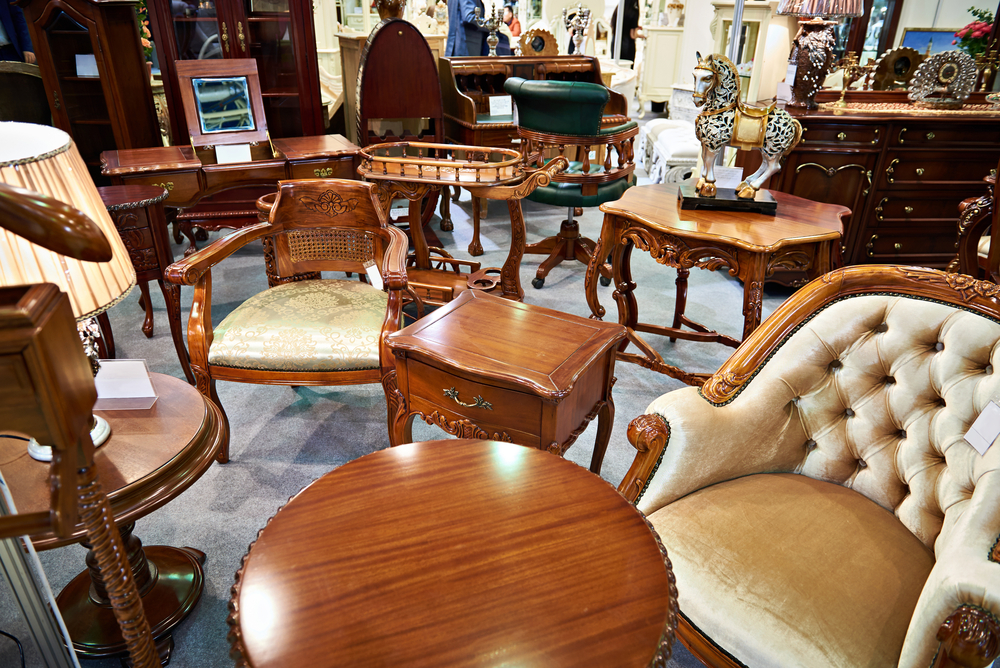
To store wooden furniture without damage, clean it, wax it, cover it in breathable cotton or moving blankets instead of plastic, and keep it off the floor in a space where the humidity stays steady. Wood swells when the air is damp and shrinks when it’s dry, so it’s the swings between the two, not the storage itself, that crack tabletops, loosen joints and lift veneer.
Quick answer: Dust and clean each piece, apply a thin coat of paste wax, and let it dry. Take off legs and hardware where you can, and bag and label the parts. Wrap everything in moving blankets or cotton sheets, never plastic directly against the wood. Raise it off the floor on pallets or boards, and store it somewhere the humidity stays near 50 percent, which in practice means climate-controlled storage for anything you’d hate to lose.
What Damages Wooden Furniture in Storage?
Five things cause most of the damage: humidity swings, moisture from the floor, heat and sunlight, pests, and pressure. Humidity is the big one. Wood takes in moisture from damp air and gives it back in dry air, and because it doesn’t expand evenly in every direction, repeated swings warp boards, open cracks and work joints loose.
Moisture from the floor is the next most common problem. Furniture legs and feet are end grain, which soaks up water like a straw. Heat and sunlight dry out and fade finishes. Wood-boring insects and mice move into furniture that sits undisturbed. And heavy boxes stacked on a tabletop or dresser leave dents and stress the joints.
What Humidity Is Best for Storing Wood Furniture?
Aim for about 50 percent relative humidity, and keep it steady. The National Park Service’s guide to caring for wooden objects, written for museum collections, puts the ideal at 50 percent plus or minus 5. It warns that wood dries out fast below 35 percent, which causes splits, and that humidity should never go above 65 percent if you want to avoid mold and fungus. The EPA gives similar advice for homes: keep indoor humidity below 60 percent, ideally between 30 and 50.
New York makes this hard. Summers are hot and humid, and apartment air gets very dry once the radiators come on. NYC’s heat season runs from October 1 to May 31, so wood furniture kept in a steam-heated apartment, or in a basement that’s damp in August and bone-dry in January, goes through big swings every year. That’s exactly the pattern that cracks solid wood tops and lifts veneer.
Does the Type of Wood Matter?
Yes, mostly in how much care each piece needs. Solid hardwoods like oak, walnut, maple, cherry and mahogany are the most durable, but solid tops and panels are also the pieces most likely to crack or warp when humidity swings, because they move as one big board. Softwoods like pine dent and scratch easily, so they need more padding and should never sit under heavier pieces.
Veneered furniture, where a thin layer of good wood is glued over a cheaper core, is the most sensitive to humidity, since swings can loosen the glue and lift or bubble the veneer. Particleboard and MDF furniture, common in flat-pack pieces, swells and crumbles if it gets wet and can’t be repaired, so keep it well off the floor and away from the unit door. Outdoor teak is a different case altogether, which we cover in our guide to storing outdoor furniture in New York.
How to Prepare Wood Furniture for Storage

Clean it gently
Dust every surface with a soft, clean cotton cloth, then wipe off any grime with a barely damp cloth and dry it right away. Don’t soak wood or use harsh cleaners, since water and strong solvents can cloud or soften the finish. Let each piece air out for a day before you wrap it.
Wax it, but skip the spray polish
A thin coat of paste wax adds a protective layer to the finish before storage. The National Park Service recommends paste wax for valuable wooden pieces and warns that most liquid and aerosol polishes contain silicones that can harm finishes over time. Apply a light coat, buff it off, and let it cure before covering the piece. If the existing wax still buffs to a sheen, you don’t need a new coat.
Take apart what comes apart
Remove table legs, bed rails, mirrors and shelves if they’re designed to come off. Put screws, bolts and small hardware in a zip bag, label it, and tape the bag to an unfinished surface of the piece it came from, like the underside of a frame, never onto the finished wood. Take out drawers or keep them empty, since a loaded drawer puts weight on runners that sit for months.
Protect corners, glass and mirrors
Wrap corners and carved edges with cardboard or foam corner guards. Wrap glass tops and mirrors separately in moving blankets and store them on their edges, not flat, so nothing gets stacked on them. Doors on cabinets and armoires can be tied shut with soft cord or a padded strap rather than tape.
Wrap it in something that breathes
Cover each piece in moving blankets or cotton sheets. Plastic wrap or plastic sheeting directly against wood traps moisture against the finish and invites mold, so if you use stretch wrap to hold blankets in place while moving, take it off once the piece is in storage. A fitted cotton sheet tied around the legs keeps dust off and still lets the wood breathe.
How to Store Wood Furniture in a Storage Unit

Get it off the floor
Never set wood furniture directly on a concrete floor. The National Park Service warns that the end grain on legs and feet will soak up moisture from concrete, stone or brick, which causes staining and fungal damage. Put pallets, 2×4 boards or furniture risers under everything, including pieces you’ll only store for a few weeks.
Pack it so nothing presses on the wood
Put the heaviest, sturdiest pieces against the back wall and keep lighter items on top only where the surface is protected by blankets and can take the weight. Don’t stack boxes on tabletops or dresser tops, since even padded weight can dent soft woods and stress the joints over months. Stand tabletops on their long edge with padding underneath, and leave a few inches between furniture and the unit walls so air can move.
Keep pests out
Wood-boring beetles and termites can damage furniture that sits undisturbed, and the National Park Service notes that drywood termites don’t need moisture at all and feed on dry wood. Before storing a piece, especially a secondhand or antique one, check for small round exit holes and fine powdery dust (called frass) underneath it. If you see either, keep that piece separate and have it looked at before it goes in with everything else. Clear out food, crumbs and loose cardboard, which attract mice and insects, and keep a little space around each piece so you can spot problems when you visit.
Lift it by the strongest part
Lift furniture by its lowest horizontal rail or frame, not by its arms, top or legs. That’s the National Park Service’s rule for museum furniture, and it’s the same reason chairs come out of storage with cracked arms: they were carried by the part that looks easiest to grab.
Can You Store Wood Furniture Without Climate Control?
For a short stay, yes, if you take precautions. A few weeks or a month or two in a standard unit during mild spring or fall weather is usually fine for everyday solid-wood or laminate pieces. Raise everything off the floor, use breathable covers, put a couple of moisture-absorber tubs in the unit, and check on things every few weeks if you can.
For anything longer, or anything you care about, climate control is the safer choice. A full New York summer and winter in a standard unit means humidity swings well outside what the NPS recommends for wood, and that’s when veneer lifts, glue joints fail and solid tops crack. Climate-controlled storage is a unit that’s heated and cooled to stay within a set range year-round, which keeps wood stable through both seasons. For tips that apply to every kind of furniture, not just wood, see our guide on how to store furniture in a storage unit.
Is a Garage, Attic or Basement OK for Wood Furniture?
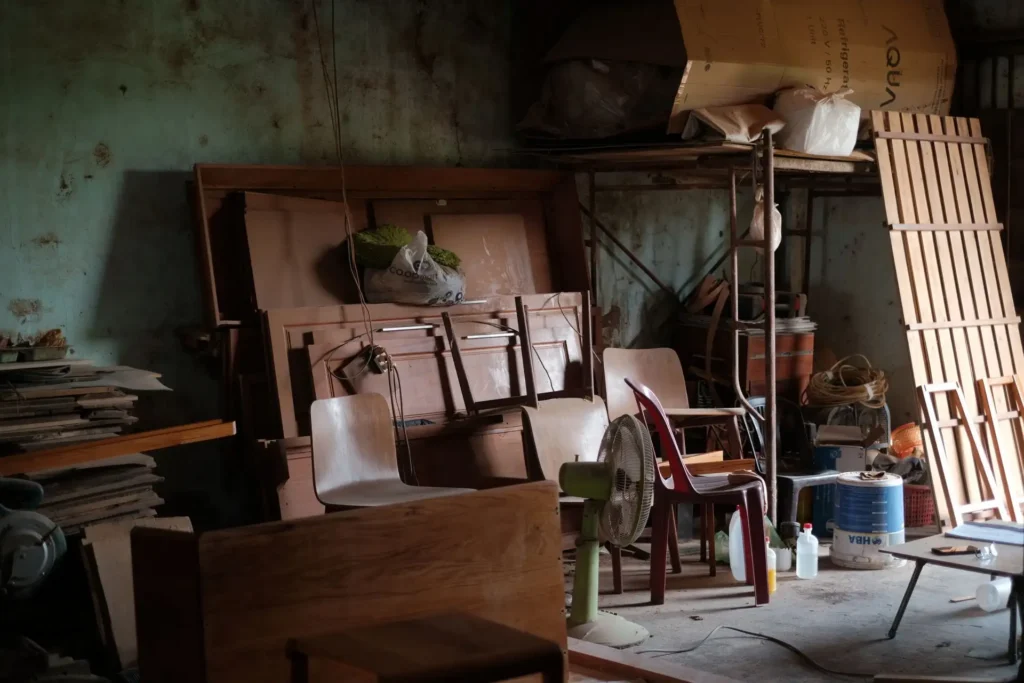
Usually not for more than a short stretch. Attics get very hot in summer and cold in winter, which dries wood out and stresses glue joints. Garages swing with the outdoor temperature and can hold car exhaust and fumes. Basements are often damp, and furniture set on a concrete basement floor soaks up moisture through its feet. In a New York apartment building, a basement storage cage has the same problems, plus less control over who goes in and out.
If one of these is your only option, raise every piece off the floor, cover it in breathable blankets, run a dehumidifier in a damp basement, and check on it every few weeks. For long stays or furniture you care about, a climate-controlled unit avoids all three problems.
How to Store Antique Wood Furniture
Treat antiques the same way, with a few extra rules. Don’t refinish, oil or “touch up” an antique before storing it, since that can lower its value and change an original finish that can’t be put back. Skip the new wax coat unless the piece already has a wax finish. Never put tape, stickers or plastic directly on an old finish, because adhesives and trapped moisture can leave marks.
Take photos of each piece from every side before it goes into storage, so you have a record of its condition. Antiques often have thin veneer, old hide glue and dried-out joints, which makes them far more sensitive to humidity swings than modern furniture. Keep them in climate-controlled storage, wrapped in clean cotton, raised off the floor and away from the unit door. If you’re storing several valuable pieces alongside other sensitive things, our list of items that need climate-controlled storage covers what else belongs in the same kind of unit.
How Much Storage Space Does Wood Furniture Need?
It depends on what you’re storing and how much comes apart. A few chairs, a nightstand and a small dresser often fit in a 5×5. A dining set with a hutch, or a bedroom set with a bed frame, dresser and nightstands, is likely closer to a 5×10 or 10×10. These are rough guides. Our storage size guide shows what fits in each unit.
Why Store Your Wood Furniture with Moishe’s?
Wood furniture needs three things in storage: steady humidity, a clean and secure space, and careful handling getting there. Here’s how Moishe’s covers each one.
- Steady conditions: Climate-controlled units, in facilities built to hold up against NYC weather, so your furniture isn’t going through humid summers and radiator-dry winters.
- Security: CCTV and guard patrols watch over the facilities while your furniture is in storage.
- Getting it there: Free pickup anywhere in the five boroughs when you rent a unit up to 5×10 for three months or more, on trucks built for narrow NYC streets. Moving at the same time? Moishe’s sister company handles moving and storage together.
- The right size: More than 20 unit sizes plus custom spaces, from a few chairs to a full apartment.
- A track record: Family-owned and storing New Yorkers’ things for more than 30 years, with customers staying four years or longer on average.
For longer stays, our page on long-term furniture storage in NYC covers how it works. Moishe’s facilities are in the Bronx at 840 E 134th St and in Queens at 833 40th Ave in Long Island City. Check current specials, then reserve your unit or call (800) 536-6564.
Not sure the piece is worth storing at all? Our guide to whether to store or donate extra furniture can help you decide.
Frequently Asked Questions
How do you store wooden furniture long term?
Clean it, apply a thin coat of paste wax, and take apart anything that comes apart. Wrap each piece in moving blankets or cotton sheets, raise it off the floor on pallets or boards, and store it where the humidity stays steady near 50 percent, which usually means a climate-controlled unit.
Should you wrap wood furniture in plastic for storage?
No, not directly against the wood. Plastic traps moisture against the finish, which can lead to mold and cloudy or damaged finishes. Use moving blankets or cotton sheets, and if you use stretch wrap to hold blankets in place while moving, take it off once the furniture is in storage.
What humidity is best for wood furniture?
About 50 percent relative humidity, kept steady. The National Park Service recommends 50 percent plus or minus 5 for wooden objects, warns that wood splits when humidity drops below 35 percent, and says it should never go above 65 percent to prevent mold.
Can wood furniture be stored in a non-climate-controlled unit?
For a few weeks or a couple of months in mild weather, usually yes, if the furniture is raised off the floor and covered with breathable blankets. For longer stays, valuable pieces or antiques, climate control is safer, since a New York summer and winter push humidity outside the range wood tolerates.
How do you store antique furniture?
Don’t refinish or oil it first, and never put tape or plastic on the original finish. Photograph it for a condition record, wrap it in clean cotton, raise it off the floor, and keep it in climate-controlled storage, since antique veneer and old glue joints are very sensitive to humidity swings.
Should you wax wood furniture before storing it?
Yes, a thin coat of paste wax helps protect the finish, as long as you buff it and let it cure before covering the piece. Avoid liquid and aerosol polishes with silicone, which can harm finishes over time. For antiques, only wax if the piece already has a wax finish.
Before You Close the Unit Door
A quick checklist for storing wood furniture:
- Dust and clean every piece, then let it air out for a day
- Apply a thin coat of paste wax and buff it, skipping silicone sprays
- Take off legs, mirrors and shelves, and bag and label the hardware
- Wrap corners, and wrap glass and mirrors separately
- Cover everything in moving blankets or cotton sheets, never plastic against the wood
- Raise every piece off the floor on pallets or boards
- Keep weight off tabletops and leave space around the walls
- Check for beetle holes and powdery dust, and keep food and loose cardboard out
- Choose climate-controlled storage for long stays, valuable pieces and antiques
Do that, and the dresser you put away comes out looking the way it went in. If your apartment doesn’t have room for it, Moishe’s climate-controlled storage units and free pickup make it easy to store it properly.